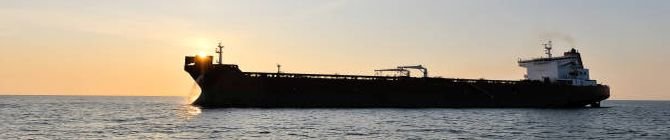
The movement of cargo vessels in the Persian Gulf has changed significantly, according to the Indian Navy, as the region’s maritime risks keep getting worse. Ships are increasingly straying from regular maritime traffic lanes, according to observations made by the Information Fusion Centre for the Indian Ocean Region (IFC-IOR).
In response to regional volatility, many are now passing through a regulated corridor close to Larak Island, indicating a more deliberate approach to navigation.
This changed routing suggests a system of “facilitated passage,” which was probably accomplished by high-level diplomatic cooperation as opposed to conventional shipping procedures. These ships seem to be cruising under particular arrangements intended to avoid direct hostilities by operating outside of designated routes.
The Navy cautions, however, that the overall security situation in the Persian Gulf, the Gulf of Oman, and the Strait of Hormuz is still at a critical threshold, marked by a structured and quickly changing danger scenario.
The situation is made more complicated by recent reports that show Iran has once again imposed restrictions on the passage of cargo ships through the Strait of Hormuz.
Because it happened less than twenty-four hours after a ceasefire agreement was allegedly signed with the United States, this development is especially noteworthy. As a result, marine activity in these seas continues to be at historically low levels, with the few movements that do take place being characterized as both sporadic and restricted.
Because certain marine traffic is now untracked, monitoring these seas has grown more challenging. Due to severe limitations on their Automatic Identification System (AIS), many vessels purposefully hide their current whereabouts.
In order to lessen the possibility of being targeted when passing through risky areas, the Navy has also observed a tactical shift in which ships include country-linked identifiers within their destination fields on tracking systems.
According to the IFC-IOR, the current state of affairs is a “multi-layered threat environment.” Seafarers are not only at risk from direct kinetic acts but also from drone strikes and falling debris from intercepted missiles, all of which can be fatal to sailors and compromise the structural integrity of vessels.
This is made worse by widespread AIS manipulation and ongoing GPS interference, both of which compromise navigational accuracy and maritime situational awareness.
Global energy supply chains are severely strained as a result of these cumulative disruptions, which also make regular shipping operations more difficult. War-risk insurance premiums have been required to stay high because to the ongoing insecurity.
Given these risks, the Indian Navy has strongly advised maritime companies and their sailors to operate in the conflict-affected area with extreme caution and adherence to all established safety procedures.