Significant obstacles have lately arisen in the ongoing economic relationship between the United States and India, underscoring the growing tension over immigration and tariff policies.
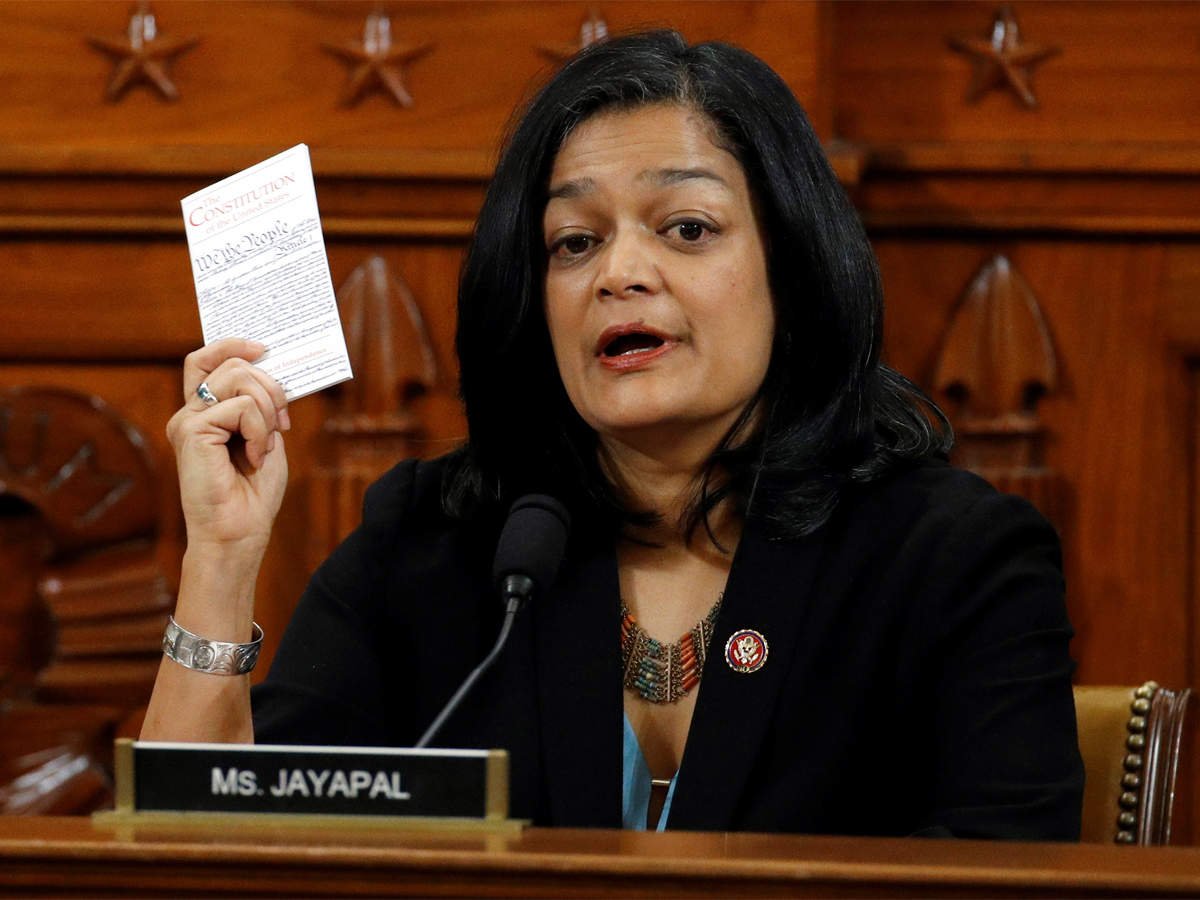
During a hearing before the House Foreign Affairs South and Central Asia Subcommittee, US Representative Pramila Jayapal expressed grave concerns about these matters.
Her remarks highlighted the negative consequences of tariffs on consumers and businesses in both nations, highlighting a bilateral friction that jeopardizes long-standing relations.
Jayapal called attention to the tariffs imposed in both the US and India, characterizing them as detrimental to both American companies and consumers as well as India’s economy.
She emphasized the interdependence of the trading relationship and how obstacles harm rather than benefit both sides. She used a particular example of a fifth-generation family-run business in Washington State that is largely dependent on agricultural imports from India to demonstrate this.
The company, which has been in business for more than 120 years, stated that the current tariffs pose the biggest threat to its ability to continue operating. The corporation is now considering either shrinking its operations or outsourcing production to less expensive countries due to these tariffs, which have increased expenses to such a level that there may be a loss of jobs and economic activity within the United States.
This illustration highlights the wider dangers that businesses that depend on international supply chains face when established trade flows are disrupted by tariff measures.
Jayapal connected these commercial conflicts to the worsening people-to-people relations between the US and India, going beyond economic issues. She criticized recent immigration rules in the US, claiming that they undermine long-standing ties by restricting legal migration pathways.
Jayapal pointed out a concerning similarity between the current rules and the discriminatory quotas that restricted Indian immigration in the past, endangering both economic cooperation and social and cultural connectedness.
These concerns about immigration and trade coincided with rising trade tensions that were made worse by comments made by former US President Donald Trump. Accusing India of “dumping” rice at artificially low rates in the US market, Trump announced his plan to possibly put new taxes on the country’s rice exports.
This accusation was a part of a larger storyline that was presented at a White House meeting where Trump unveiled a USD 12 billion rescue package to help American farmers who were facing poor pricing.
Farmers who attended the gathering expressed their complaints about low-cost imports from nations like Vietnam, Thailand, and India, alleging that these imports were lowering domestic agricultural prices.
Trump responded by questioning the lack of additional taxes on these imports and promising to “take care” of the matter, hinting to a potential increase in tariff barriers aimed at Indian food staples. By enforcing a confrontational trade posture rather than looking for mutual compromise, this attitude runs the risk of escalating tensions even more.
Given that a US trade delegation was holding talks in India from December 10–11, 2025, the timing of these developments is especially delicate. These discussions, which have mostly focused on tariff policies and market access, have been sluggish and contentious.
The strategic economic partnership between India and the US is more at risk due to the ongoing impasse, as unresolved tariff disagreements could overshadow more general cooperation objectives.
The US has already imposed tariffs of up to 50% on the majority of Indian exports starting in August 2025, which further complicated the situation. Concerns about India’s imports of Russian oil amid geopolitical tensions served as one of the driving forces behind this action. Further uncertainty is created by Trump’s recent warnings regarding rice tariffs, which could sabotage talks and endanger the two countries’ future trade relations.
Overall, the situation is one of growing trade tension at a time when both parties had planned to strengthen collaboration, especially in the context of an open and free Indo-Pacific area.
Jayapal’s comments serve as a sobering reminder about the detrimental effects of protectionist measures, which run the risk of hurting not only bilateral trade figures but also the larger strategic partnership and interpersonal relationships that support long-term cooperation.
Both nations must strike a balance between the demands of a stable and mutually beneficial cooperation and internal political pressures. Years of progress in India-US relations could be undone by the persistence of high tariffs and restrictive immigration laws, which would have an impact on communities, businesses, and consumers on both sides.
To prevent an expensive and damaging breakdown in one of the most significant bilateral relationships in the world, it will be crucial to address these concerns in a cooperative rather than combative manner.