Following similar claims made by US President Donald Trump, China has asserted its position as a mediator in the recent military conflict between India and Pakistan.
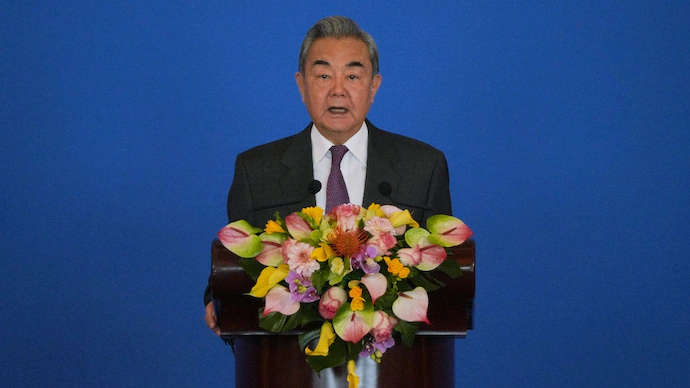
At a conference on international relations, Chinese Foreign Minister Wang Yi stated that Beijing handled both the symptoms and the underlying causes of a number of global hotspots, including the tensions between India and Pakistan.
The conflict began on April 22, 2025, when 26 civilians, primarily Hindu tourists, were killed in a terror attack in the Pahalgam Valley, Jammu and Kashmir. In response to Pakistani accusations of an Indian false flag operation, the Resistance Front, associated with Lashkar-e-Taiba, first claimed credit before denying it.
In response, India launched Operation Sindoor on May 7, attacking nine terrorist camps in Pakistan and Pakistan-administered Kashmir that were connected to Jaish-e-Mohammed, Lashkar-e-Taiba, and Hizbul Mujahideen using precision missiles and airstrikes. New Delhi claimed that more than 100 militants had been killed and emphasized that the attacks were targeted and non-escalatory, avoiding both military and civilian targets.
Pakistan replied by artillery firing along the Line of Control, especially in Poonch, killing Indian citizens and destroying infrastructure after denouncing the operation as an act of war and alleging civilian casualties, including in mosques. As a result, Pakistan launched Operation Bunyan-un-Marsoos, which targeted Indian air bases, sparking the first drone conflict between the nuclear-armed neighbors.
Pakistan claims to have used J-10 fighters and PL-15 missiles to down many Indian jets, including Rafales, in aerial engagements involving over 114 aircraft in beyond-visual-range warfare. Although India recognized losses as part of fighting without providing specifics, independent evaluations confirmed at least four Indian losses, marking the combat debut of modern Chinese weaponry.
On May 10, mutual missile strikes on air bases marked the height of the escalation. Pakistan bombed Udhampur, Pathankot, and Adampur, while India targeted Nur Khan, Rafiqui, and other targets. While Pakistan utilized JF-17s and drones amid reports of cyber attacks on both sides, India used BrahMos missiles and loitering munitions, hitting Pakistani radars and hangars.
Following direct DGMO hotline negotiations, a truce went into effect on May 10 at 17:00 IST, with both sides declaring victory. While Shehbaz Sharif of Pakistan gave credit to several countries, including the US, Saudi Arabia, and China, India insisted on a bilateral settlement and rejected the involvement of third parties.
Trump repeatedly asserted that he prevented conflict by threatening to impose 200% tariffs and claiming that seven Indian jets were shot down. India rejected this allegation as unfounded. In the midst of nuclear concerns close to Pakistan’s Strategic Plans Division headquarters, his administration interacted with both sides through JD Vance and Marco Rubio.
Given China’s strong links and standing as Pakistan’s main arms supplier, Wang Yi’s involvement allegation calls into question China’s role. On May 7, Beijing called for moderation and expressed sadness at India’s strikes, but an invitation to the SCO meeting was sent to Narendra Modi, indicating that India-China relations were strengthening.
According to a study released in November by the US-China Economic and Security Review Commission, China engaged in a disinformation campaign following Operation Sindoor, discrediting French Rafales and promoting J-35 jets using AI-generated wreckage photographs on fictitious accounts. In light of the aerial losses, this is consistent with worries about Beijing’s grey-zone operations.
Eight military and paramilitary troops, primarily from shelling, and one airman at Udhampur were among the casualties, along with twenty-one Indian civilians. Pakistan denied the presence of militants at the targeted locations while reporting 40 civilian and 13 military deaths from strikes.
Despite US warnings, there was no nuclear escalation during the four-day conflict, which featured sophisticated drone warfare, S-400 intercepts, and missile duels. Mediation claims highlight conflicting narratives in South Asian geopolitics, but the ceasefire is maintained and flights have resumed.