In the midst of the interruptions brought on by the Iran war, India has looked to its longtime ally Russia for increased oil supply, which has strengthened bilateral relations.
According to analysts, the two countries want to maintain their energy commerce in defiance of international sanctions while strategically balancing forces from China and the United States, according to a South China Morning Post story.
A recurring theme among Indian officials and political analysts is that Russia is still New Delhi’s “all-weather friend.” Both nations view each other as vital counterweights to China and an unstable United States, which is based on deep strategic interests.
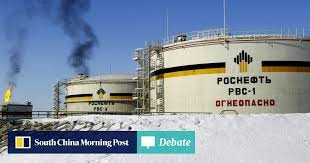
Denis Manturov, the first deputy prime minister of Russia, declared on Friday that Moscow is in a prime position to boost supplies of LNG and oil to India. This occurs in the context of unrest in the energy supply brought on by the war in Iran.
At the end of a two-day trip to India, Manturov said these things. He discussed trade, energy, and industrial cooperation with Prime Minister Narendra Modi, Foreign Minister S Jaishankar, and other Indian ministries while in Delhi.
For the first time since the conflict in Ukraine in 2022, Delhi is reportedly negotiating with Moscow to start direct LNG imports from Russia. In the meantime, 60 million barrels of Russian crude have been ordered by Indian refiners for April.
Since US President Donald Trump imposed a penalty tax on Delhi for buying Russian crude in August, bilateral relations have been strained. The goal of the action was to discourage India from interacting with Moscow’s energy industry.
The “deep-rooted, time-tested relationship” between the two countries was commended on April 2 by Randhir Jaiswal, spokesman for India’s external affairs ministry. During Manturov’s and other Russian officials’ visits, he emphasized continued collaboration in trade, defense, and strategic areas.
This notion has been mirrored by Indian analysts who have recently appeared on local television, referring to Russia as India’s “trusted friend.” When Prime Minister Modi visited Russia in July 2024 and again in December of last year, when President Vladimir Putin attended the yearly bilateral meeting in Delhi, he referred to Moscow as a “all-weather friend.”
Modi stated that both parties have expanded on their 2025 summit talks in a social media post on Thursday. They promoted trade, fertilizer, connectivity, and interpersonal relationships.
The idea that “a friend in need is a friend indeed” is the foundation of Delhi-Moscow relations, according to former Indian diplomat Anil Trigunayat, who was Delhi’s deputy chief of mission in Moscow. He cited shared interests in the field of energy.
Trigunayat confirmed that despite pressure from around the world, India-Russian relations are still reliable and tried-and-true. Here, the proverb “friendship in times of need” strikes a powerful chord.
Russian Foreign Minister Sergey Lavrov praised India’s “independent foreign policy” during a bilateral relations conference last month in Moscow. He referred to their “time-tested” friendship as an example of interstate ties based on respect and trust.
In international relations, “true friendship” is uncommon and motivated more by interests than feelings, according to analyst Ivan Lidarev, a visiting research fellow at the Institute of South Asian Studies at the National University of Singapore. However, the relationship between Russia and India is strong but becoming more limited.
Although the relationship goes beyond this issue, Lidarev pointed out that the Iran war has clearly spurred New Delhi to strengthen ties with Moscow. Both countries envision a multipolar world order that emphasizes strong multilateral institutions, defined domains of influence for major powers, state sovereignty, and a prominent role for the Global South.
Through platforms like Brics and the Shanghai Cooperation Organization, India and Russia see each other as important allies in their efforts to limit China’s growing power. Lidarev cautioned that in the absence of this alliance, India would become more dependent on an untrustworthy United States, and Russia may lean more toward Beijing.
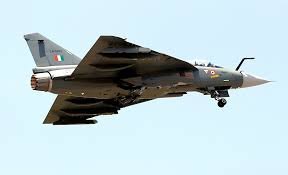
Manturov’s visit followed India’s defence ministry signing a US$46.9 million contract with Russia’s Rosoboronexport last month for an air defence missile system.
Rajan Kumar, associate professor at Jawaharlal Nehru University’s School of International Studies, argued that maintaining close ties with Moscow has prevented a tighter Russia-China alignment and kept Pakistan at bay. Russia, in turn, values India’s vast market.
Kumar emphasized that Russia survived the post-Ukraine war sanctions imposed by the West because of ongoing trade with China and India. Moscow thus acknowledges the importance of the alliance.
Michael Rubin, a former Pentagon official and senior scholar at the American Enterprise Institute in Washington, noted that Moscow is taking advantage of the Middle East situation to deepen ties with Delhi. He brought up Russia’s previous failure to fulfill its obligations to supply India with weapons.
Rubin said that although the Kremlin and New Delhi have similar grievances with the US, India’s future is uncertain. Both Trump and Putin’s provocative and unilateral acts are to blame for this.
The Rosoboronexport agreement was mentioned by Rahul Wankhede, a research analyst at the Manohar Parrikar Institute for Defence Studies and Analyses in Delhi. He mentioned Russia and India’s long-standing defense cooperation.
According to Wankhede, a large number of India’s weaponry have Russian origins, making continuous reliance on Moscow for maintenance, upgrades, and replacement parts necessary. The United States keeps an eye on these connections and has threatened to impose sanctions, but because of Delhi’s strategic importance, it has refrained from cutting off defense ties—a trend that is certain to continue.
Regarding Manturov’s energy remarks, Wankhede clarified that rather than ideological affinity, India’s involvement with Russian energy is based on cost advantages, supply stability, and Russia’s underutilized refining capacity.
Wankhede emphasized that India imports Russian oil for purposes other than domestic ones. In spite of sanctions, a large amount gets processed and reexported to Europe and other regions, demonstrating a complex geoeconomic web in which the economies of Russia, India, and even the West depend on steady energy supplies.