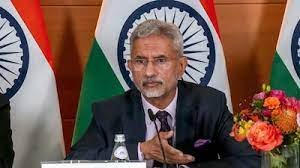
During Prime Minister Narendra Modi’s official visit to Muscat on December 17–18, 2025, India and Oman signed a historic Comprehensive Economic Partnership Agreement (CEPA).
This agreement, which was signed in conjunction with a Joint Vision Document on marine Cooperation, lays out a plan for improved cooperation in the areas of trade, energy, marine security, and interpersonal relationships.
According to the joint statement from India’s Ministry of External Affairs, the agreements underline the developing “multifaceted strategic partnership” between these maritime neighbors.
The CEPA seeks to remove trade restrictions and create a stable environment for increasing bilateral investment and trade. It encourages increased private sector participation in both economies and facilitates the development of jobs. This action is in line with India’s goal of becoming a center for manufacturing and services, while Oman’s Vision 2040 strategy places it as a gateway for energy and logistics.
Textiles, autos, chemicals, equipment, and fertilizers were identified as key industries by both countries as they examined trade diversification potential. Mechanisms for local currency transactions, which could lower transaction costs and increase economic resilience, were discussed. Leaders also applauded the development of a bilateral investment treaty, which aims to foster an atmosphere that is conducive to investment and boost corporate confidence.
One of the main themes of the discussions was energy cooperation. Both in India and abroad, the two parties looked into cooperative partnerships in production and exploration. Proposals for cooperative investments, knowledge transfer, and long-term collaborations in line with sustainable objectives focused on new and renewable energy sectors, such as green hydrogen and green ammonia.
With promises to further cooperation through cooperative exercises, training initiatives, and high-level exchanges, defense ties saw a major uptick.
Piracy and marine crimes will be the focus of improved maritime domain awareness and information-sharing systems. The Joint Vision Document on Maritime Cooperation combines sustainable ocean resource use, blue economy priorities, and regional security.
Seven significant signatures and adoptions resulted from the visit. These included the CEPA itself as well as memoranda of understanding pertaining to higher education, agriculture and related industries, and maritime heritage and museums. Business ties are further strengthened by an agreement between the Confederation of Indian Industry and the Oman Chamber of Commerce & Industry.
An executive program on millet farming and agri-food innovation is one of the other projects. Both the ICCR Chair Program in Indian Studies at Sohar University and the Ayush chair at Oman’s National University of Science and Technology have received proposals. Maritime heritage outreach is highlighted by the INSV Kaundinya’s upcoming inaugural journey to Oman.
As connectivity talks developed, Oman showed a strong interest in air service traffic rights, such as destination numbers and code-sharing agreements. India indicated the possibility of better aviation ties by acknowledging this request. Such actions could improve travel and interpersonal interactions.
India thanked Oman for protecting the well-being of its around 675,000-person community in the Sultanate. Oman acknowledged the diaspora’s crucial contributions to the country’s advancement. This reciprocal gratitude strengthens the partnership’s human component.
Regarding security, both countries vowed to continue working together to combat terrorism in all of its forms and manifestations. Concerned about the humanitarian situation in Gaza, the leaders called for the prompt and secure delivery of relief. They reiterated their support for a fair, long-lasting settlement that includes a sovereign Palestinian state and welcomed the first phase of a Gaza Peace Plan.
These changes strengthen supply-chain resilience in the face of Gulf dynamics and represent a strategic realignment of India-Oman relations.
Through shared economic and security imperatives, Oman’s Vision 2040 supports India’s Make in India and Atmanirbhar Bharat projects. The agreements put both nations in a better position to work together to address global issues.