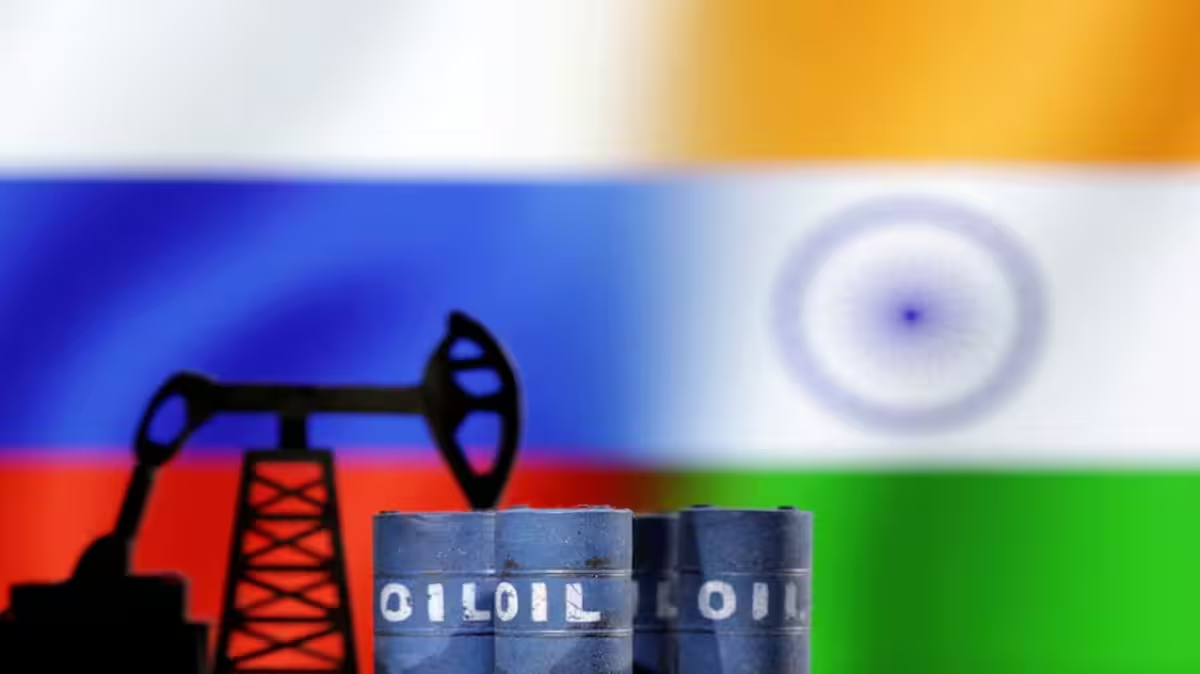
India’s crude oil import patterns have significantly changed, especially between April and November of the fiscal year, according to the country’s Economic Survey for 2026. Due to increased diversification in energy sourcing, imports from the United States have significantly increased while those from Russia have significantly decreased.
According to the poll, imports of crude oil have increased significantly from the same period in FY25 for a number of countries, including Libya, Egypt, Brazil, the United States, and Brunei. On the other hand, supplies from Venezuela, Iraq, Saudi Arabia, and Russia have decreased.
This diversification reflects India’s efforts to widen its supplier base amid global geopolitical pressures and unpredictable energy markets. Growing shares from other nations indicate a strategic shift, even though conventional suppliers continue to have a dominant position.
In particular, the US’s share of India’s crude oil imports increased from 4.6% to 8.1% between April and November of FY26. Additionally, the UAE’s share increased from 9.4% to 11.1%.
Egypt’s share has increased significantly from 0.3% to 1.4%. Libya’s contribution went from 0.1% to 0.5%, while Nigeria’s went from 2.2% to 3.3%.
These adjustments take place in the context of India’s strong merchandise trade performance. The poll emphasizes that a move toward higher-value goods and new markets is necessary to maintain export growth.
It also discusses the undervaluation of the Indian rupee, which acts as a buffer against increased US tariffs on Indian goods. This undervaluation helps offset the effects without driving inflation from expensive crude imports.
Due to a 15.4% reduction in crude oil prices, petroleum product exports fell 24.7% year over year in FY25. According to current trends, India is lessening its dependency on any one supply while adjusting to decreased oil prices.
Given that Russia has been a significant discounted supplier since the conflict in Ukraine, its dropping share is especially notable. The increase from the US is consistent with improved bilateral energy relations and Washington’s efforts to export more petroleum and liquefied natural gas.
Broader ramifications include better energy security for India, the world’s third-largest oil importer. Diversification minimizes vulnerability to supply disruptions, such as those from Middle Eastern conflicts or sanctions on Russia.
In terms of the economy, cheaper imports help India’s refining margins and trade balance. The poll cautions that long-term export momentum necessitates innovation in advanced industries outside of commodities.
The strength of the rupee acts as a timely buffer in the event that trade tensions with the US arise. Reduced oil prices around the world also reduce import costs, freeing up funds for defense and infrastructure projects.
The survey’s findings emphasize careful risk management in energy purchase as India negotiates these dynamics. Future measures may further promote imports from stable, friendly nations to lock in these gains.