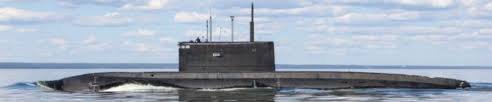
To immediately improve the Indian Navy’s underwater capabilities, Russia has proposed to provide India with three refurbished Kilo-class diesel-electric submarines, valued at less than $1 billion. According to defense officials, this offer surfaced soon after President Vladimir Putin visited New Delhi in early December 2025, during which talks covered a potential lease of a nuclear-powered Akula-class submarine by 2028.
Due to delays in India’s Project 75I program, the Kilo-class vessels—which are sourced from Russia’s excess reserves—act as an affordable temporary solution.
Each submarine will undergo extensive modernisation to extend its service life by 20 years, with an estimated cost below $300 million per vessel. Key upgrades include integration of the Klub-S missile system, the export variant of the Kalibr, which launches from torpedo tubes to engage land and anti-ship targets at 220-300 km ranges.
Additional enhancements encompass low-observable stealth coatings for sonar evasion, automated periscope systems, and modern lithium-ion batteries to boost endurance.
This proposal marks a reduction from an earlier July 2025 offer of six submarines, tailored to align with India’s current financial and operational priorities.
The deal directly addresses the retirement of three Kilo-class boats—INS Sindhurakshak in 2017, and INS Sindhuvir and INS Sindhudhwaj between 2017 and 2022—providing one-to-one replacements.
Meanwhile, the Indian Navy marked a poignant milestone on 19 December 2025, as INS Sindhughosh, the lead submarine of her class, was decommissioned after four decades of exemplary service.
Such measures prevent further depletion of the fleet, which remains effective in strategic areas like the Malacca Strait despite age-related maintenance challenges.
India’s conventional submarine fleet stands at 16 vessels as of late 2025: seven Russian Sindhughosh-class (Kilo), four German HDW Shishumar-class, and six French-designed Kalvari-class (Scorpene). Without swift acquisitions, projections indicate the fleet could shrink to single digits by the mid-2030s, undermining maritime security in the Indian Ocean region. The ageing Kilo platforms, acquired between 1986 and 2000, form the backbone but face operational availability constraints.
The Klub-S system, already familiar to the Indian Navy, enhances lethality with its 400-kg warhead, precise guidance, and ability to manoeuvre around obstacles even in adverse conditions.
A related deal in February 2025 secured Klub-S missiles specifically for submarine operations, underscoring deepening India-Russia defence ties. These upgrades position the refurbished submarines to meet modern warfare standards, bridging gaps until indigenous projects mature.
Nuclear-powered submarines offer superior submerged endurance, stealth, and range over diesel-electric types, enabling extended patrols critical for Indian Ocean security against threats from China and Pakistan. Restricted to training, it builds expertise for India’s indigenous SSNs while deepening Russia ties amid global shifts. This fits India’s indigenisation goals, with prior Chakra leases (ending 2021) providing operational lessons.
Russia’s timely intervention reflects its role as a reliable partner in bolstering India’s naval strength, particularly as geopolitical tensions in the Indo-Pacific intensify. The package not only sustains fleet numbers but also infuses advanced technology at a fraction of new-build costs.
Negotiations advance amid broader strategic cooperation, including nuclear submarine leases and missile integrations like BrahMos on Akula-class platforms.
India’s own ballistic-missile submarine program nears a pivotal milestone with the third SSBN, INS Aridhaman, in its final trials and poised for imminent commissioning, as confirmed by Navy Chief Admiral Dinesh K Tripathi.
Given the escalating geopolitical tensions in the Indo-Pacific, Russia’s prompt participation demonstrates its position as a dependable ally in enhancing India’s naval might. In addition to maintaining fleet numbers, the package incorporates cutting-edge technologies at a fraction of the cost of new construction.
In the context of larger strategic cooperation, such as the leasing of nuclear submarines and the integration of missiles like BrahMos on Akula-class platforms, negotiations are moving forward.
According to Navy Chief Admiral Dinesh K. Tripathi, India’s own ballistic-missile submarine program is approaching a significant milestone with the third SSBN, INS Aridhaman, in its final testing and ready for impending commissioning.
Russia’s timely involvement shows that it is a reliable ally in bolstering India’s naval power, especially in light of the growing geopolitical tensions in the Indo-Pacific. The package includes state-of-the-art technologies for a fraction of the cost of new construction while also preserving fleet numbers.
Negotiations are proceeding in the framework of broader strategic cooperation, including the integration of missiles like BrahMos on Akula-class platforms and the leasing of nuclear submarines.
With the third SSBN, INS Aridhaman, undergoing final testing and prepared for upcoming commissioning, India’s own ballistic-missile submarine program is nearing a major milestone, according to Navy Chief Admiral Dinesh K. Tripathi.