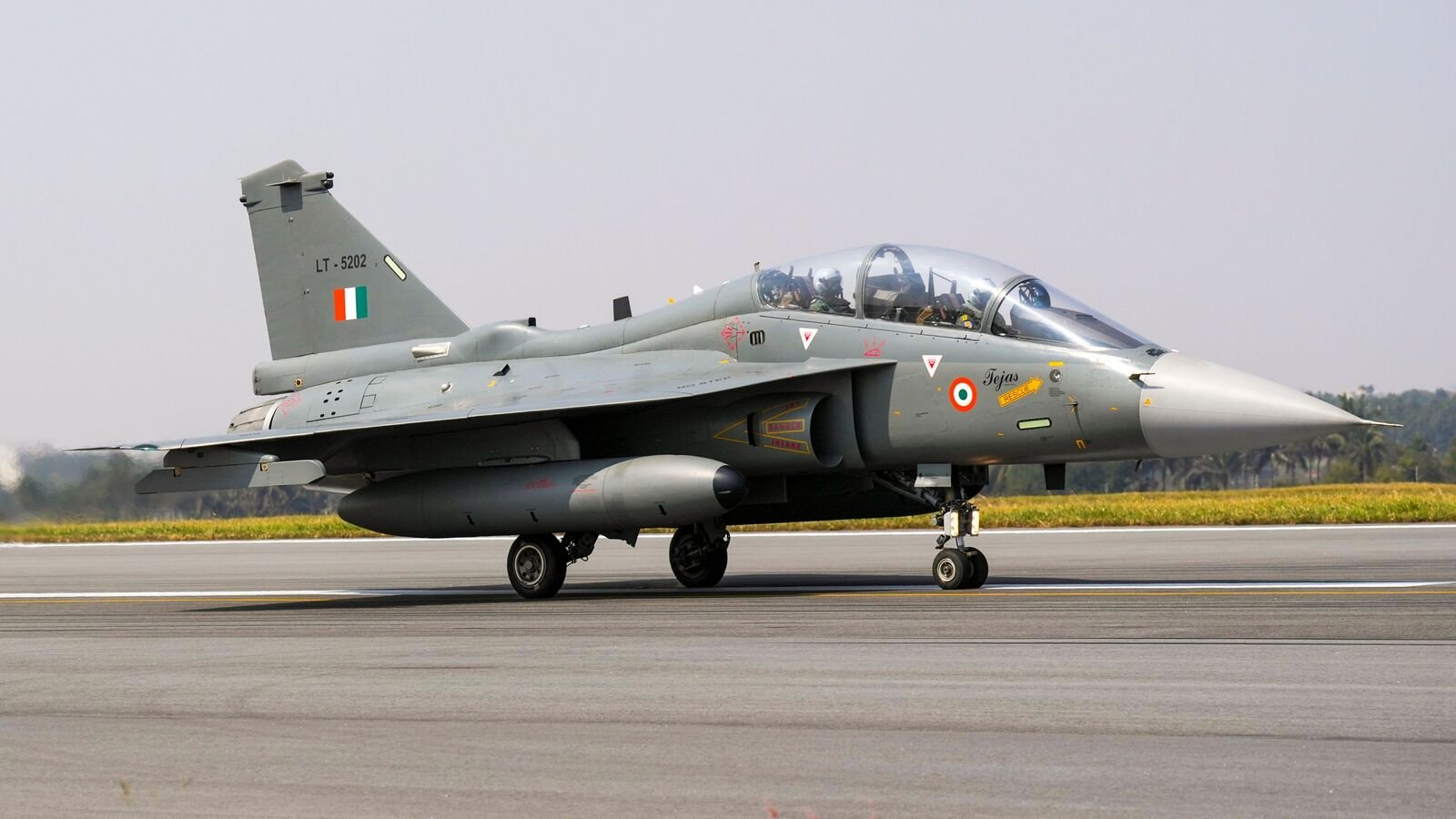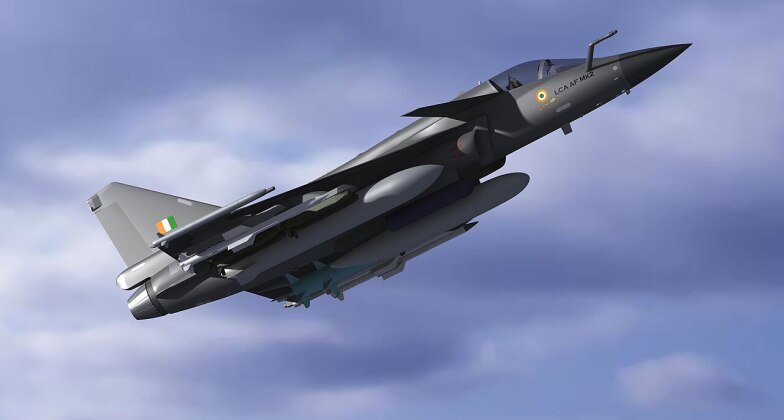
For the past thirty months or thereabouts, the TEJAS MK-2 prototype has been fully connected and is almost finished. According to an investigation by Alpha Defense, the Ministry of Defence (MoD) has not published a single image of the aircraft despite this momentous occasion in the assembly hangar of Hindustan Aeronautics Limited (HAL).
In light of current procurement and integration issues, this exceptional opacity in a well-known program that started key design phase closing around mid-2023 raises concerns about strategic timing.
The imported Infrared Search and Track (IRST) sensor intended for the initial prototype is a second factor. This crucial avionics suite has not yet reached HAL’s Bangalore location. It was purchased from a foreign original equipment manufacturer (OEM) to improve beyond-visual-range detection capabilities.
If the aircraft were rolled out without this obvious nose-mounted pod, astute observers would perceive the prototype as lacking. The program’s momentum would be weakened and supply chain delays would come under scrutiny as the initial excitement from a partial unveiling would soon give way to louder criticism over obvious gaps.
Recent unveilings show that India’s approach to significant defense achievements constantly turns them into great national spectacles. Prime Ministerial attendance, live broadcasts, and ceremonial fanfare were all part of the TEJAS MK-1A’s inaugural flight in March 2024 at HAL’s facilities.
In a similar vein, the commissioning of INS Vikrant in September 2022 sparked popular enthusiasm, media excitement, and top leadership. Following this playbook, the TEJAS MK-2 rollout will be scheduled for maximum patriotic impact rather than hurried pictures, guaranteeing alignment with political calendars, defense expos, or significant anniversaries like Independence Day or the foundation of HAL.
According to Aeronautical Development Agency (ADA) reports, the jet is essentially near-ready within the safe hangar, with airframe integration, avionics bays, and structural coupling significantly advanced.
Only when the MoD determines that the time is tactically ideal will a picture—or more likely, a full video reveal—be made public. This deliberate constraint protects the program’s trajectory toward its planned maiden flight in late 2026 or early 2027 by striking a balance between vendor negotiations, public relations, and operational secrecy.
The image of the TEJAS MK-2 will be made public when India determines it is appropriate, following the signing of the engine contract, the installation of the IRST sensor, and the preparation of the ceremonial stage. Silence has strategic and symbolic functions until then.