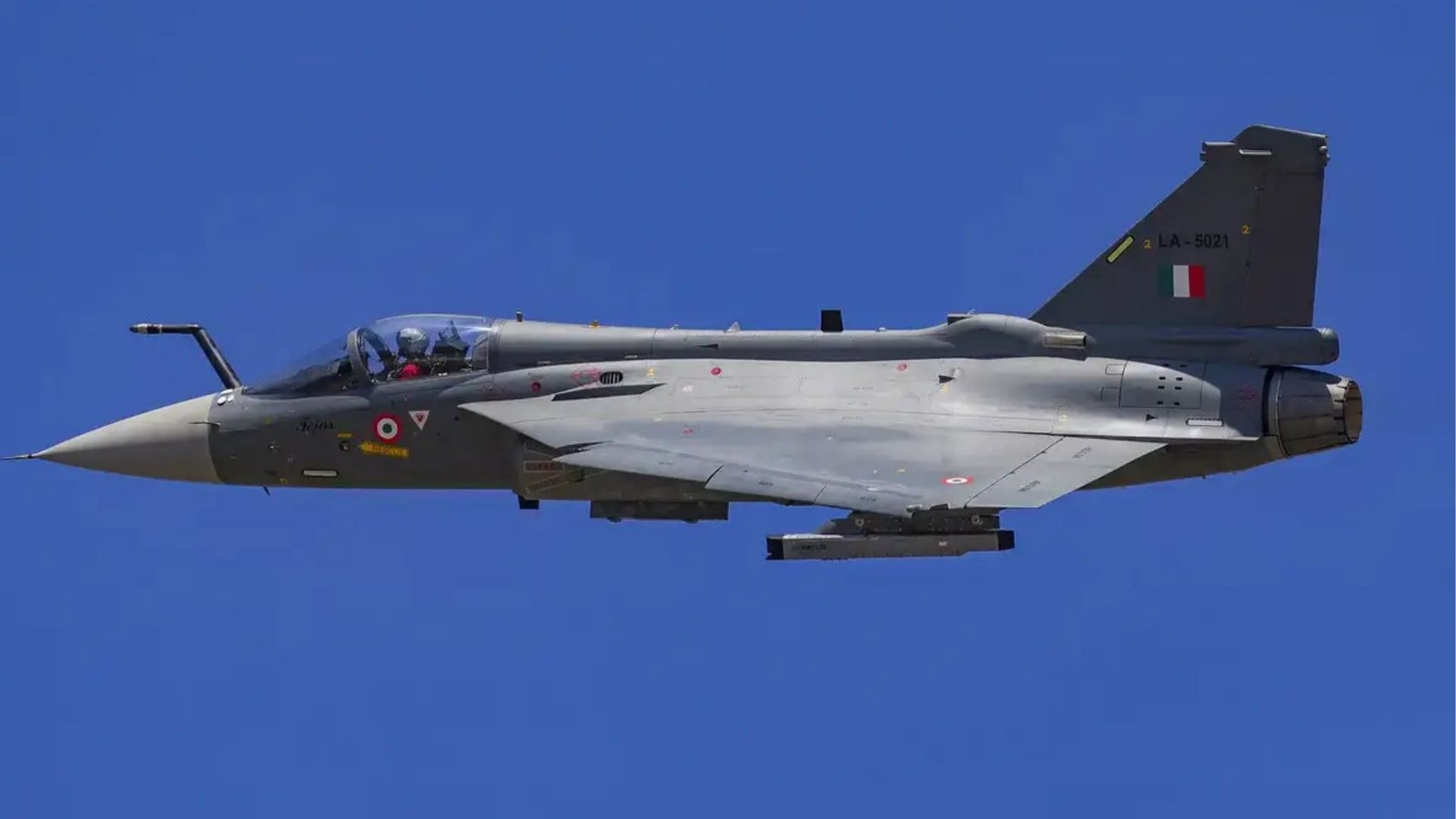
India could think about adding sophisticated infrared search and track systems to its fleet of TEJAS MK-1A fighters. This would be in line with international trends in fighting stealth aircraft.
In disputed air combat conditions throughout the Indian Ocean Region, the Indian Air Force has acknowledged that the current sensors on the TEJAS MK-1A do not offer the level of performance necessary to compete against more modern Chinese and Pakistani fighters.
IRST technology provides a covert method of observation and interaction by passively detecting heat signatures produced by engines and airframes, in contrast to conventional radar, which actively produces signals and can be detected by opponent warning systems.
Infrared sensors pick up emissions from weapons bays, hot turbine parts, engine exhausts, and even the fuselage’s aerodynamic heating. Aircraft with small radar cross sections still generate observable heat signatures because stealth shaping has little effect on infrared radiation.
IRST systems are significantly less susceptible to radar jamming and electronic warfare, and they enable fighters to track and engage targets without disclosing their own positions. Because of this, they are especially useful in the Indian Ocean theater, where enemies are using more sophisticated stealth aircraft and electronic warfare systems are becoming more common.
The incorporation of IRST would represent a significant improvement in capabilities for India’s present TEJAS MK-1A fighters, which mostly rely on radar and electronic sensors.
India is anticipated to concentrate on creating an internally integrated IRST system for the TEJAS MK-1A, utilizing its digital mission architecture to seamlessly integrate radar and electronic warfare inputs with infrared data. In addition to offering a wider field of view and improved durability, this would protect external hard-points for weapons and fuel tanks.
While Western jets like the F-35 and F/A-18E Block 3 adopted IRST systems more recently, Soviet fighters like the MiG-29 and Su-27 incorporated them as early as the 1980s. Therefore, India’s implementation of IRST for the TEJAS MK-1A would be in line with international best practices and guarantee the fighter’s continued competitiveness against adversaries using stealth platforms.
Similar designs could be investigated for the TEJAS MK-1A in order to maximize efficiency and combat effectiveness. Boeing has already exhibited nose-mounted IRST installations on the F-15EX.
China’s quick acquisition of cutting-edge stealth fighters, such as the J-20 and the lighter J-35, combined with at least two sixth-generation designs anticipated to go into service in the early 2030s, is the reason for the urgency of this upgradinChina’s quick acquisition of cutting-edge stealth fighters, such as the J-20 and the lighter J-35, combined with at least two sixth-generation designs anticipated to go into service in the early
2030s, is the reason for the urgency of this upgrading.
gIndia’s security situation is made more difficult by Pakistan’s ongoing modernization of its F-16 force with enhancements supplied by the United States. The Indian Air Force would have a significant advantage in identifying and tracking these enemy aircraft with IRST-equipped TEJAS MK-1A fighters, especially in the dense electronic warfare environment of the Indian Ocean Region.
In situations where their lack of stealth is less of a disadvantage, TEJAS fighters would be able to close in and engage at shorter ranges. However, by increasing detection ranges and coordinating fighter responses, adversary airborne early warning and control aircraft—which make up the biggest fleets in Asia—may make this strategy more difficult..Therefore, including IRST into the TEJAS MK-1A is not only a technological advancement but also a strategic requirement. It would guarantee that India’s indigenous fighter stays relevant in the changing air warfare environment of the Indian Ocean Region, increase survivability, and improve detection of stealth threats.India’s Defense Strategy
The development of IRST systems domestically will lessen dependency on foreign suppliers and support the larger “Make in India” campaign, strengthening India’s defense industrial base.