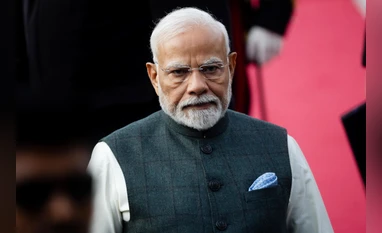
At the next Modi-Putin meeting on December 5, 2025, India intends to ask for five more squadrons of the Russian S-400 Triumf air defense systems.
This action comes after the three S-400 squadrons that have previously been inducted demonstrated their efficacy during Operation Sindoor, where the system successfully shot down sophisticated Pakistani jets at long range. In order to create reserves and replenish stockpiles used in operational engagements, India is also getting ready to make a sizable purchase of S-400 missiles costing about ₹10,000 crore.
Under a complete yearly maintenance contract already authorized by the Indian defense ministry, Russia would set up a Maintenance, Repair, and Overhaul (MRO) facility for these systems in India.
Regarding the acquisition of advanced aircraft, India is still considering purchasing two or three squadrons of Russia’s fifth-generation Sukhoi Su-57 stealth jets. India hasn’t decided yet, but Moscow is aggressively pushing the Su-57 as a rival to the US F-35.
These aircraft are viewed by the Indian Air Force (IAF) as a possible temporary solution to close the capability gap until the AMCA, an indigenous stealth fighter, is put into service in 2035. Although negotiations are still ongoing, plans to produce up to 120–140 Su-57 aircraft locally at HAL Nashik are moving forward, indicating a significant transfer of knowledge and a boost to “Make in India” objectives.
In the meantime, a ₹63,000 crore indigenous upgrade comprising upgraded radars, avionics, armaments, and sensor integration is scheduled to be approved by the Cabinet Committee on Security (CCS) for the first 84 Sukhoi Su-30MKI planes, extending their operational life by thirty years.
This combination of modernization and buying underscores India’s objective of increasing its own defense production capabilities while striking a balance with Russian imports.
Air Chief Marshal A P Singh has referred to the S-400 system as a “gamechanger” due to its use in Operation Sindoor, where it neutralized adversary aircraft and achieved the longest known kill distance of 314 km. India’s emphasis on keeping a strong air defense umbrella in the face of changing regional threats is demonstrated by the growth of the S-400 fleet and missile inventory.
In order to ensure that the Indian armed forces have diverse and cutting-edge combat capabilities, this strategic approach reflects India’s balancing act between pursuing complementary procurement from Western partners and upholding traditional defense ties with Russia, particularly for air defense and fighter jets. The