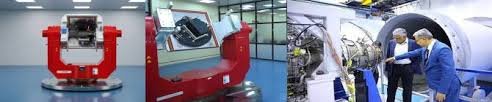
Following a technical agreement between Hindustan Aeronautics Ltd (HAL) and GE Aerospace, India’s aviation industry has taken a step closer to producing GE F-414 turbofan engines locally, according to TOI.
Three planned fighter jets—the TEJAS MK-2, the Twin-Engined Deck Based Fighter, and the first Advanced Medium Combat Aircraft (AMCA) variant—will be powered by the F-414, making this development critical. The deal represents a major step toward boosting India’s independence in cutting-edge aerospace and decreasing reliance on outside assistance.
The technical agreement establishes the framework for HAL and GE’s commercial discussions. After the agreement is finalized, 80% of the power plant would be manufactured in India. In order to ensure that India is no longer dependent on foreign Original Equipment Manufacturers (OEMs) for these vital technologies, GE will transfer the intellectual property of the components made locally.
Since 2008, India has been looking for an engine that can produce between 95 and 100 kilonewtons. The Eurojet Turbo EJ2000 and GE’s F-414, which powers the American F/A-18 Super Hornet, were the competitors at the time.
Even though the US government first approved only a 55% Transfer of Technology, GE was ultimately chosen. However, the current talks are aiming for a much more ambitious 80% ToT, which represents a significant advancement in India’s aerospace aspirations.
In 2023, HAL and GE signed a Memorandum of Understanding to manufacture the F-414 in India. During Prime Minister Modi’s visit to the US, this Memorandum of Understanding was formalized. Building on that foundation, the most recent agreement advances actual production and deployment.
The technology transfer will cover key components of contemporary fighter aircraft powerplants. These include sophisticated procedures like laser drilling, coating the engine’s hot area, and producing crystal blades. To guarantee that India can adopt and maintain these technology for upcoming projects, such features are essential.
By collaborating with reputable organizations that have tested, deployable solutions, India’s aviation sector is taking a practical approach. This approach ensures that the industry can complete more complicated projects while avoiding needless investment on technological innovation. This approach, which strikes a balance between ambition and pragmatism, is demonstrated by the partnership with GE Aerospace.