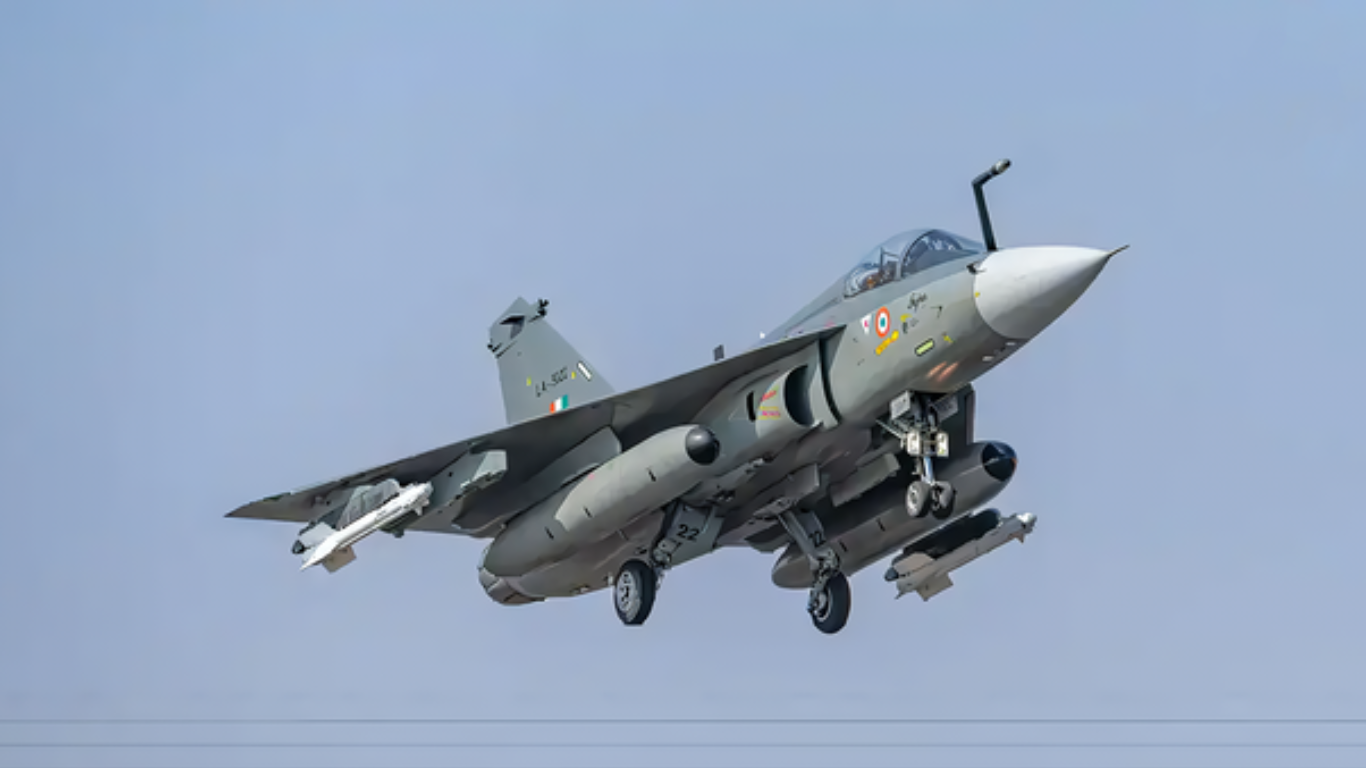
With the successful completion of full weapons integration and live-firing trials of the ASTRA MK-1 Beyond Visual Range (BVR) and ASRAAM Close Combat Missiles (CCM), the Light Combat Aircraft (LCA) TEJAS MK-1A program has reached a crucial operational milestone.
This indicates that the indigenous fighter is prepared for widespread deployment throughout the Indian Air Force and represents a significant advancement in its combat preparedness.
Over the previous year, Hindustan Aeronautics Limited (HAL) and the Aeronautical Development Agency (ADA) conducted many rounds of weapon integration and launch validation testing for both front-line production variants and developmental aircraft.
These tests verified successful target acquisition and engagement in all tactical regimes, a smooth avionics–weapon interaction, and system stability during high-g manoeuvres.
The Defence Research and Development Organisation (DRDO) created the ASTRA MK-1 missile, which was tested in a variety of modes, such as head-on and tail-chase engagements, verifying its operational envelope from low-level firings to high-altitude intercepts.
Now fully integrated with TEJAS’ Open Mission Computer, radar, and electronic warfare suite, the domestic BVR missile can engage targets more than 100 km.
The ASRAAM, provided by MBDA under an IAF standardisation initiative, has undergone parallel testing to confirm its compatibility with TEJAS’s sensor fusion architecture and storage management system. Using the aircraft’s Helmet Mounted Display and Sight (HMDS), the missile showed strong lock-on performance and high off-bore-sight engagement, enhancing its close-range fighting potential.
The TEJAS MK-1A now has the broadest operational air-to-air missile coverage in India, encompassing both forward and rear hemisphere engagements, thanks to this effective integration. Few light fighters in the world have such thorough missile integration in both the BVR and Within Visual Range categories, making TEJAS a front-line platform that can handle sophisticated aerial threats.
The completion of these trials, according to HAL sources, satisfies the IAF’s final operational qualification requirements for the complete induction of the ASTRA MK-1 and ASRAAM on TEJAS MK-1A squadrons. The aircraft may now carry a variety of missile payloads, adjusting its load-out according on target priorities and mission objectives.
The TEJAS avionics and fire-control system’s maturity is further validated by the trials’ success, which is the result of years of modular integration effort by ADA, HAL, and important technological partners. The robustness of the aircraft’s baseline architecture is demonstrated by the engineers’ report that no significant changes to the airframe or pylons were required.
With its completely validated weapons capability, the MK-1A is now moving closer to receiving final operational clearance. This achievement complements the domestic drive for greater self-reliance in aerospace weapons and systems integration and sets the stage for expedited induction into IAF service.
Future TEJAS versions are anticipated to carry a wholly domestic air-to-air missile suite, strengthening India’s strategic autonomy in aerial combat technology, with ASTRA MK-2 already in advanced flight assessment and Astra IR variant development in progress.