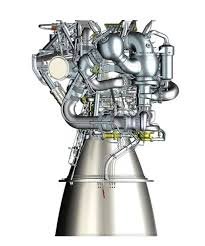
Regarding the delivery of semi-cryogenic rocket engines, the Russian space agency Roscosmos and the Indian Space Research Organization (ISRO) have had in-depth technical talks in Moscow.
A draft contract for the procurement is presently undergoing approval, according to ISRO’s Annual Report for 2025–2026. This represents a major advancement in India’s efforts to bolster its launch vehicle capabilitiesAlthough India has been working on its own semi-cryogenic engine development, working with Roscosmos could help close important technological gaps and expedite deadlines. Although the delivery timetable and contract finalization date were not specified in the Annual Report, the approval stage shows that negotiations have progressed beyond initial conversations.
When the first successful hot test of the Engine Power Head Test Article (PHTA) was carried out at the ISRO Propulsion Complex in Mahendragiri, Tamil Nadu, on March 28, 2025, ISRO stated that it had made significant progress in the development of semi-cryogenic engines. The development of the semi-cryogenic propulsion engine and stage is being spearheaded by the Liquid Propulsion Systems Centre (LPSC).
.The 2000 kN semi-cryogenic engine known as SE2000 powers the SC120 stage, which is intended to take the place of the LVM3 rocket’s existing L110 core liquid stage. In addition to increasing cargo capacity, this improvement will act as a booster stage for upcoming launch vehicles.
In comparison to the current L110 stage, ISRO has emphasized that using non-toxic and non-hazardous propellants like liquid oxygen and kerosene will provide better performance.
The LVM3’s payload capacity in geosynchronous transfer orbit (GTO) will rise from 4 to 5 tons with the addition of semi-cryogenic propulsion and an upgraded cryogenic stage. A thrust chamber, pre-burner, turbo pump system, control parts, and start-up system are among the sophisticated subsystems included in the SE2000 engine. With a chamber pressure of 180 bar, propellant input pressures of up to 600 bar, and a specific impulse of 335 seconds, it runs on a sophisticated oxidizer-rich staged combustion cycle.
Such high-thrust engines are extremely difficult to develop and are still only available in a small number of countries. India’s desire to become more independent in cutting-edge rocketry is demonstrated by its pursuit of this technology.
Purchasing from Russia is a workable temporary fix, though, as domestic development of the SE2000 engine is still years away from being ready for flight. The RD-191 engine, created by Russia’s NPO Energomash and utilized in the Angara rocket series, has been repeatedly mentioned in reports since 2023 as the most likely option for India to purchase. ISRO’s long-term goal for reusable launch vehicles is in line with the RD-191’s throttleability, which permits accurate flight control and the recovery and reuse of rocket stages.
In order to accelerate the improvement of LVM3’s payload capacity, monies have also been set aside by India’s Parliamentary Standing Committee on Science and Technology for the introduction of purchased semi-cryogenic engines in 2026–2027. This demonstrates the government’s dedication to fostering ISRO’s technological development.
The visit to Moscow is a component of ISRO’s larger foreign activities throughout the previous 12 months. According to the Annual Report, ISRO has held discussions with other nations on topics like as capacity building, satellite navigation, earth observation, and human spaceflight.
Beyond propulsion systems, ISRO and Russia collaborate. The Space Research Institute in Russia has been chosen as a partner payload provider for India’s proposed Venus Orbiter Mission (VOM), according to the article.
Studying Venus’s atmosphere, ionosphere, surface, subsurface, and solar interactions is the mission’s main goal. In April 2025, agreements for international cooperation were obtained, such as a Memorandum of Understanding with Roscosmos for the Venus InfraRed Atmospheric gases Linker (VIRAL) payload and another with the Swedish Institute of Space Physics for the VNA payload.
The Principal Scientist has been named, and the Science Working Group has been established to maximize the mission’s scientific benefits. Another step toward the Venus Orbiter Mission’s eventual launch is the completion of the Preliminary Design Review.
When taken as a whole, these advancements demonstrate India’s dual-track strategy of developing domestic propulsion technology while strategically working with foreign partners to speed up capability creation. Indian
Once completed, the purchase of semi-cryogenic engines from Russia will mark a significant advancement in Indo-Russian space cooperation and support India’s path towards increased independence in cutting-edge rocket technology.