Even as Washington intensifies sanctions under “Economic Fury,” Iran has made a new proposal to the US through Pakistan to end the West Asia conflict, and a Chinese company has closed its Gwadar Free Zone plant and laid off all employees due to growing losses.
Both the vulnerability of foreign investment in Pakistan and the growing geopolitical-economic competition between Iran, China, and the US are highlighted by this twin development.
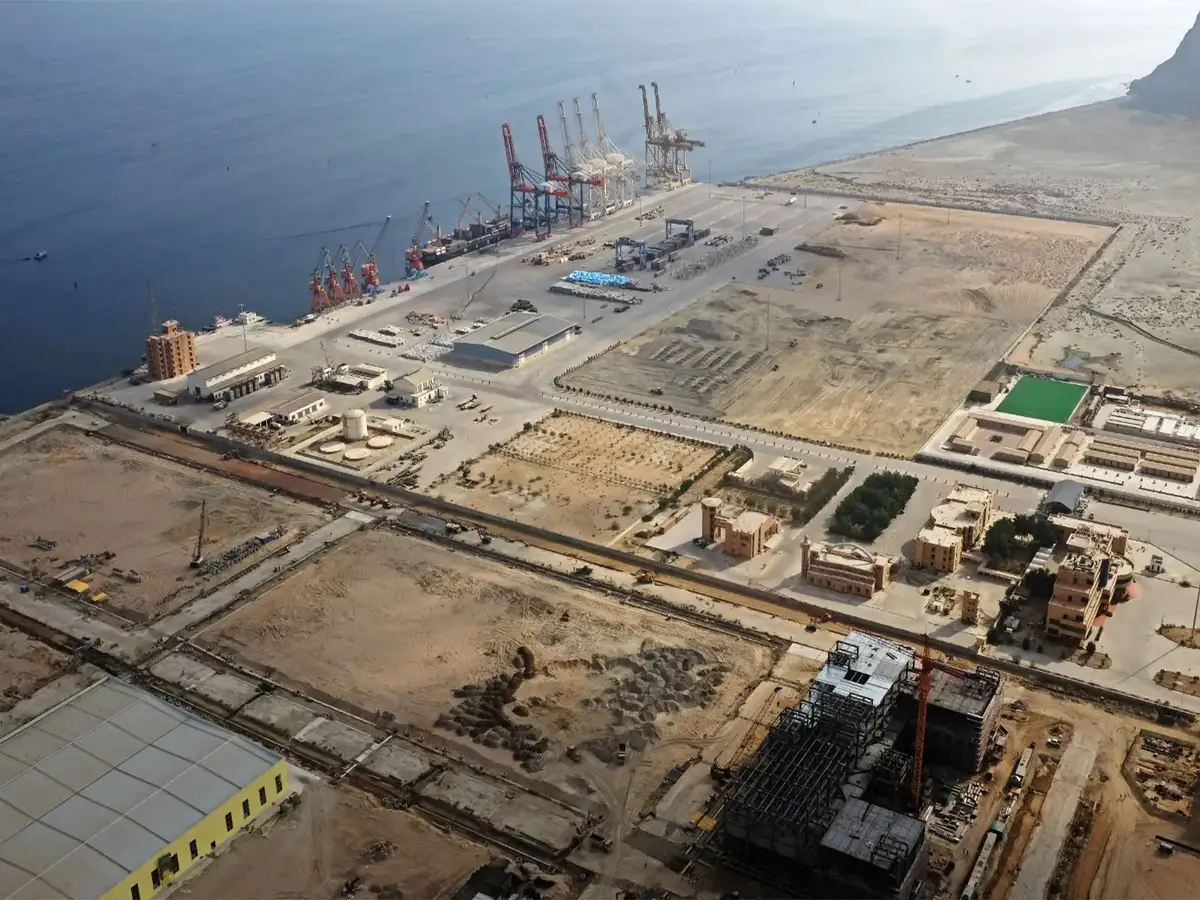
On International Labour Day, the Hangeng Trade Company announced the shutdown of its Gwadar factory, citing operational challenges and “non-commercial factors” that prevented further business.
Its shipments remained stalled, resulting in ongoing losses even though they complied with international export regulations. The company said that despite three months of engagement with Pakistani authorities, no resolution was reached. It paid all outstanding debts, including three months’ worth of salaries, fines, electricity bills, and container demurrage charges, before closing.
The business emphasized that China and Pakistan are still strong allies, pointing out that Gwadar is a key project under the China-Pakistan Economic Corridor (CPEC). But it emphasized that for firms to thrive, a “clear and workable policy environment” is crucial.
It expressed gratitude to the Pakistani government and the Ministry of Planning for their support of Pak-China collaboration, but advised potential investors to carefully consider the risks associated with Gwadar.
This closure raises questions about investor trust and the sustainability of foreign-backed businesses in Pakistan’s vital port city, especially as it coincides with Prime Minister Shehbaz Sharif’s planned business-to-business summit visit to China.
Low cargo volumes, inadequate infrastructure, and local unrest have all been ongoing problems for Gwadar. Chinese projects have frequently been the focus of security threats from Baloch insurgents, which has increased investor anAdditionally, reports indicate that operating challenges for international companies have been exacerbated by bureaucratic delays, including disagreements over export permits.
In the meantime, Iran has sent the US a fresh proposal through Pakistan in an effort to move the continuing conflict’s negotiations forward. Reopening the Strait of Hormuz and postponing nuclear negotiations are given top priority in the proposal, which was submitted on April 30.
xiety.This represents a change in Tehran’s strategy, which prioritizes maritime access and quick de-escalation over nuclear concerns. After weeks of precarious ceasefire and unsuccessful negotiations in Islamabad, analysts see this as an attempt to end the impasse.
The US has responded with skepticism. Wide-ranging sanctions against Iran’s financial and energy networks were announced by Washington on May 1. The Treasury accused three Iranian currency exchange businesses and related front companies of laundering billions of dollars under the “Economic Fury” program.
These networks transform Iran’s oil earnings, which are mostly settled in Chinese yuan, into money that Tehran’s military and its proxies can use. Iran is “the head of the snake for global terrorism,” according to Treasury Secretary Scott Bessent, who promised unrelenting pressure.
The sanctions coincide with the Strait of Hormuz’s protracted closure, which has affected roughly 20% of the world’s gas and oil shipments and caused prices to rise beyond $100 per barrel. Iran has continued its embargo in response to US naval pressure, despite its insistence that it does not seek conflictThe economic consequences are dire: while international markets continue to be uneasy, Iran is dealing with inflation that is over 100%, declining buying power, and mounting unemployment.
Pakistan is facing challenges in its role as a mediator. Iran’s claims to be mediating peace were destroyed when its delegation abruptly left Islamabad on April 25. Islamabad’s aspirations to establish itself as a regional stabilizer confront increasing obstacles as Gwadar’s investment climate deteriorates and Iran-US negotiations stall.
.