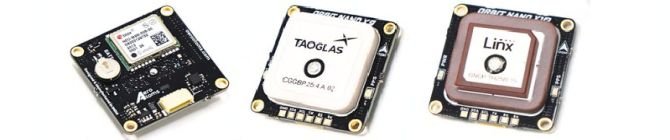
By introducing domestic navigation chips, Bangalore-based Aero Atoms has become a major force in India’s drive for independence in aerospace and navigation technologies. These chips, which concentrate on small, high-precision systems designed for demanding applications in the robotics, defense, and drone industries, mark a substantial development in Made-in-India solutions.
One of the company’s main products is the ORBIT NANO, which is billed as the smallest RTK+NavIC GPS module in the world. It combines India’s NavIC constellation with Real-Time Kinematic positioning to provide centimeter-level precision in incredibly small designs.
The ORBIT NEO, a next-generation NavIC-enhanced RTK GPS system optimized for aerial and autonomous operations that lessens reliance on foreign GPS systems, complements this.
Building on ISRO’s NavIC (Navigation with Indian Constellation) architecture, which offers accurate location throughout India and up to 1,500 km beyond its boundaries, this launch is in line with larger national goals like Make in India and the indigenization of crucial defense components.
NavIC is perfect for military navigation, civilian monitoring, and strategic assets because of its twin services, Standard Positioning and Restricted Service, which provide accuracy better than 20 meters.
Similar to previous attempts by companies like Elena Geo Systems, which presented a wholly indigenous NavIC processor for mobiles, wearables, and military systems in 2023, Aero Atoms’ advancements are based on a lineage of Bengaluru start-ups developing GNSS processors. These chips prioritize regional signal dependability over worldwide systems like GPS and ensure smooth integration into existing circuits thanks to their multi-frequency support, low power consumption, and software configurability.
In the context of geopolitical tensions, when reliance on US-controlled GPS proved vulnerable during events like the Kargil conflict, the strategic significance of such developments cannot be understated. This is why ISRO developed NavIC as an autonomous regional system. By powering school bus trackers, precision agriculture drones, and hypersonic missile guidance, Aero Atoms’ contributions continue this pace while promoting export possibilities through patented Indian intellectual property.
With baseband processors now reaching commercial size, recent government partnerships, like those with Hyderabad’s Manjeera Digital Systems under the Ministries of Science & Technology and Electronics, highlight a developing ecosystem for NavIC chip production.
With a focus on miniaturization for space-constrained platforms like UAVs and wearables, Aero Atoms, which is based in Bangalore’s aerospace sector next to ISRO headquarters, positions itself to capitalize on this expansion.
Atomic clock synchronization, similar to ISRO’s Bengaluru navigation center, is one of the ORBIT series’ technical strengths. It allows for continuous coverage and consistent indoor time through special algorithms that adhere to IRNSS requirements.
For India’s changing air defense and border surveillance requirements including systems like TEJAS aircraft and Akash missiles, this lowers latency and improves resilience against jamming.
Aero Atoms’ processors will be essential to operationalizing complete constellation capabilities as India develops NavIC with scheduled launching of additional satellites by 2026, including sophisticated NVS versions.
The company’s emphasis on RTK fusion with NavIC ensures robustness in contested areas by supporting multi-constellation fallback and increasing positional fidelity to sub-centimeter levels.\
In terms of the economy, these launches strengthen Bengaluru’s position as India’s Silicon Valley for defense technology, generating jobs in manufacturing and R&D while reducing import prices for foreign GNSS modules, which are believed to be in the billions. By integrating these chips into domestic platforms like the Tejas Mk2 or naval UAVs, partnerships with DRDO and HAL could advance Atmanirbharta in key areas.
With potential scalability to quantum avionics and next-generation fighters, Aero Atoms’ trajectory indicates a paradigm shift towards autonomous navigation technology. India’s geopolitical advantage in Indo-Pacific security dynamics is strengthened by the company’s prioritization of Indian orbital assets, which reduces supply chain risks and empowers industries from logistics to disaster management.