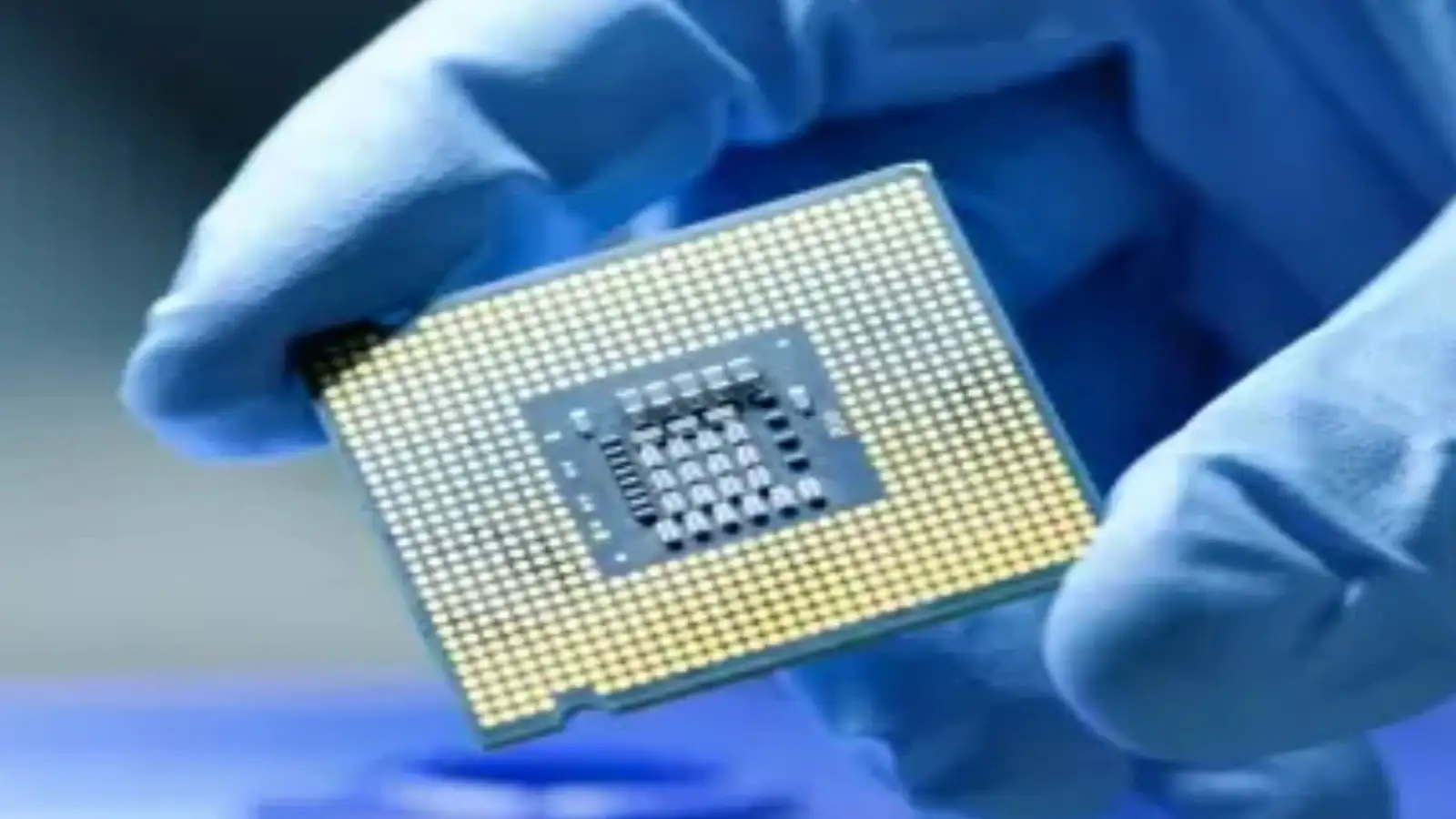
An important turning point in India’s industrial and technical development was the unveiling of TATA Electronics’ ₹91,000-crore semiconductor production facility at Dholera, Gujarat.
Prime Minister Narendra Modi was present when TATA Electronics and ASML signed a strategic agreement at the latter’s Veldhoven, Netherlands, headquarters on May 16, 2026.
In partnership with Taiwan’s Powerchip Semiconductor Manufacturing Corporation, ASML, the only producer of extreme-ultraviolet lithography machines, pledged to provide lithography systems, technical training, and ecosystem support for India’s first commercial fabrication plant. By late 2026, the plant is anticipated to generate its first commercially viable wafers.
The cutting edge of 2nm or 3nm technology will not be pursued by the Dholera fab. With extra capacity for 40, 55, 90, and 110nm nodes, it will instead concentrate on 28nm chips. These developed nodes serve as the foundation for embedded silicon, telecom radios, automotive electronics, power management systems, and industrial sensors.
Only 3% of the world’s wafer volume is at 3nm and below, and about 70% is at 28nm and above. India is making a pragmatic decision by designing for the chips that its economy actually uses rather than the ones that make headlines.
The argument that India should go straight for 3nm or 7nm ignores the past. Every prosperous semiconductor nation started off on the periphery of its time and worked its way up. It took 35 years for TSMC to reach 3 nm, having begun at 3 microns in 1987.
After significant state subsidies, SMIC only achieved 7nm-class production in 2023, having started at 180nm in 2000. Chartered Semiconductor in Singapore and Silterra in Malaysia, on the other hand, were unable to maintain their competitiveness because they either chased the leading edge too soon or stagnated at the following edge without anchoring. Due to a lack of market demand or financial closure, India’s previous attempts—from the SCL factory in Mohali to the SemIndia and Jaypee-IBM ventures—failed.
But the market still exists today, propelled by defense electronics, EVs, smartphones, and geopolitical detachment from China.
The economic justification is obvious. In contrast to $20 billion for 3nm and $28 billion for 2nm, the establishment of a 28nm fabrication plant costs between $10 and $15 billion. The High-NA EUV scanners from ASML, which are necessary for sub-7nm production, weigh as much as two Boeing 777s, cost $380 million each, and require six months to install.
The issue is demand, not affordability. In March 2026, Renesas introduced its flagship 28nm automotive microcontroller. Eighty percent of the chips in contemporary cars are between 28 and 180 nm in size, according to the US Bureau of Industry and Security.
Between 1,400 and 3,000 chips are found in a single passenger car, and shortages of 28–90nm microcontrollers—not 3nm processors—caused the worldwide auto crisis in 2021. In September 2021, Maruti Suzuki alone reduced production by 51%, costing the Indian auto industry approximately ₹25,000 crore in missed sales.
The ecology of India is being put together concurrently. The back-end assistance for packaging, testing, and integration is provided by TATA’s OSAT facility in Jagiroad, Micron’s Sanand plant, which opened in February 2026, CG Power-Renesas at Sanand, and Kaynes Semicon’s operations since March 2026.
India will have a full supply chain in place by the time Dholera’s wafers are released. Compared to previous flops where fabs were presented without a domestic market or supporting ecosystem, this represents a significant shift.
There are still difficulties. Only 15% of the Design-Linked Incentive scheme’s FY24 budget was disbursed, according to analysts like Pranay Kotasthane, who draw attention to execution flaws. SMIC has already slashed wafer pricing to flood the market, and China’s Big Fund-III is investing $47 billion at 28nm.
However, trade impediments from the West bolster India’s position. Section 5949 of the US NDAA will prohibit federal contractors from using Chinese chips in key systems starting in December 2027. The US slapped a 50% tariff on Chinese semiconductors in January 2025, with additional increases due in 2027. There must be a reliable source for mature-node capacity from trusted suppliers, and India is becoming a viable option.
By 2028, the Dholera factory is anticipated to reach full capacity, generating more than 20,000 employment and establishing a supplier network for packaging, chemicals, and gases.
India’s electronics sector, which imported parts worth ₹34,000 crore last year, will benefit directly from it. Given that semiconductor success is a multi-decade marathon, the project reflects India’s desire to walk before it runs.
India has finally reached the beginning of a thirty-year journey by selecting 28nm. The appeal of 3nm can wait; Dholera will make the semiconductors that India really needs.
