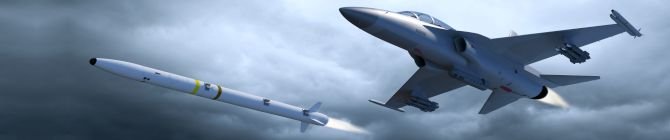
On 25 March, the Ministry of Defence issued a Request for Proposal (RFP) to begin the process of integrating and testing ASRAAM on the MiG-29 UPG variant. The contract is not limited to the missiles alone—it also includes launchers, supporting systems, and extensive training for both pilots and ground crews to ensure smooth operational deployment
Developed by the European missile consortium MBDA, ASRAAM represents some of the most advanced short-range missile technology currently in service. India has already successfully integrated the missile on its indigenous Tejas fighter and Jaguar strike aircraft, proving its compatibility with both domestic and legacy platforms.
.One of the biggest advantages of ASRAAM is its range. The missile can strike targets beyond 25 kilometres, which is more than double the reach of the ageing Soviet-era R-73 missile currently used by the MiG-29. The R-73, designed in the 1980s, typically has an effective range of only 10 to 15 kilometres, putting Indian pilots at a disadvantage in modern dogfightsIndia currently operates more than 55 MiG-29 aircraft, including eight twin-seat trainer versions. These jets have been a core part of India’s air defence network since they were first inducted into service in 1987. Despite their age, they continue to play a crucial frontline role, especially along sensitive western and northern borders.
.With the ASRAAM upgrade, the IAF plans to phase out the R-73 across the entire MiG-29 fleet. The new missile’s fire-and-forget capability allows pilots to launch and disengage immediately, rather than maintaining a lock on the target. This not only improves survivability but also gives pilots greater tactical flexibility during fast-moving engagements.
ASRAAM is capable of flying at speeds exceeding Mach 3 and is designed to intercept highly manoeuvrable enemy aircraft. Measuring 2.9 metres in length and weighing around 88 kilograms, the missile carries a high-explosive warhead designed to destroy targets with precision, even during intense dogfights.
India’s push to integrate ASRAAM is also tied to its broader goal of defence self-reliance. A 2021 agreement between MBDA and Bharat Dynamics Limited (BDL) paved the way for local assembly and testing of the missile. A dedicated production facility is currently being developed in Hyderabad, which will reduce India’s dependence on foreign suppliers and strengthen domestic defence manufacturing
The upgrade also carries clear strategic implications. China’s PL-10 missile, deployed on advanced fighters such as the J-10C, J-16 and the stealth J-20, offers a comparable range of around 20 to 30 kilometres. Pakistan has also equipped its JF-17 Block-III aircraft with the export version of the same missile, the PL-10E. By equipping its MiG-29s with ASRAAM, India aims to maintain a technological edge in any potential aerial confrontation.
Despite being a Soviet-era platform, the MiG-29 continues to serve as a vital air superiority fighter for the IAF. Earlier this month, Air Chief Marshal A.P. Singh personally flew a MiG-29 during a readiness assessment near the border, highlighting the aircraft’s continued importance in frontline operations.
The MiG-29 is not just limited to air-to-air combat; it is also capable of carrying out precision ground strikes, making it a versatile multi-role fighter. Its performance in recent operations has reinforced its value, even as newer aircraft are gradually inducted into service.
Integrating ASRAAM will help close a critical capability gap in short-range combat, especially when facing advanced adversaries and stealth-enabled threats. More importantly, it allows India to modernise an existing fleet at a fraction of the cost of purchasing entirely new aircraft.
The integration process is expected to unfold between 2026 and 2028, depending on how quickly contracts are finalised and testing is completed. This timeline aligns with the IAF’s broader modernisation roadmap, which includes the induction of Tejas Mk-1A fighters and upgrades to the Su-30MKI fleet.
In the long term, the upgraded MiG-29s are expected to remain in service well into the 2030s, helping bridge the gap until India’s next-generation Advanced Medium Combat Aircraft (AMCA) becomes operational.
Overall, the addition of ASRAAM marks a decisive step in sharpening the Indian Air Force’s combat edge. By combining a proven fighter platform with cutting-edge missile technology, India is ensuring that its aerial forces remain prepared, responsive, and capable in an increasingly contested regional environment. ✈️🔥