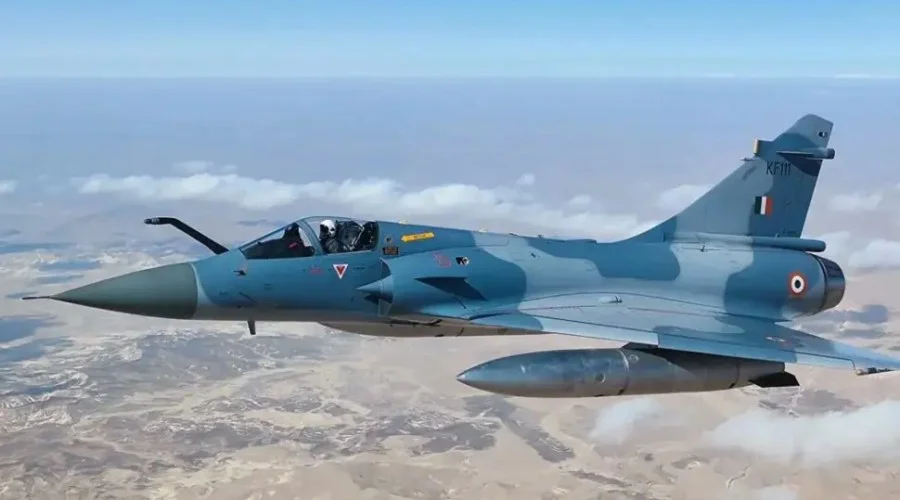
The intended retirement date of the Mirage-2000 “Vajra” fighter will be extended by about three to four years as a result of the Indian Air Force’s (IAF) decision to keep its fleet in frontline service until 2038–2039.
As a number of next-generation combat aircraft programs continue to experience delayed induction timetables, the action is meant to avoid a capability gap.Analysis of Indian Defense
Growing strain on the IAF’s fighter force structure is reflected in the extension. The service now operates about 31 fighter squadrons, which is much less than its authorized number of 42 squadrons. This deficiency has grown more critical in light of the changing needs for regional security.
The decision was largely influenced by the replacement platforms’ slower-than-anticipated arrival.
Additionally, the service-life extension lessens the impact of the SEPECAT Jaguar fleet’s planned withdrawal.
The IAF acquires a reliable bridge capability during a crucial transition moment by keeping the Mirage-2000.
Dassault Aviation’s ongoing support has enabled the fleet to be sustained past 2035.
f
Significant improvements have already been made to the Mirage-2000 fleet, such as the addition of MICA beyond-visual-range missiles, enhanced avionics, and RDY-2 radar systems.
The fighter’s operational reputation remains strong within the IAF. Mirage-2000 aircraft played a decisive role during the 1999 Kargil War and later formed the backbone of the 2019 Balakot precision-strike mission, underlining their continued value as reliable strike platforms.In a broader sense, the ruling emphasizes the fine line that Indian air power planners must walk.