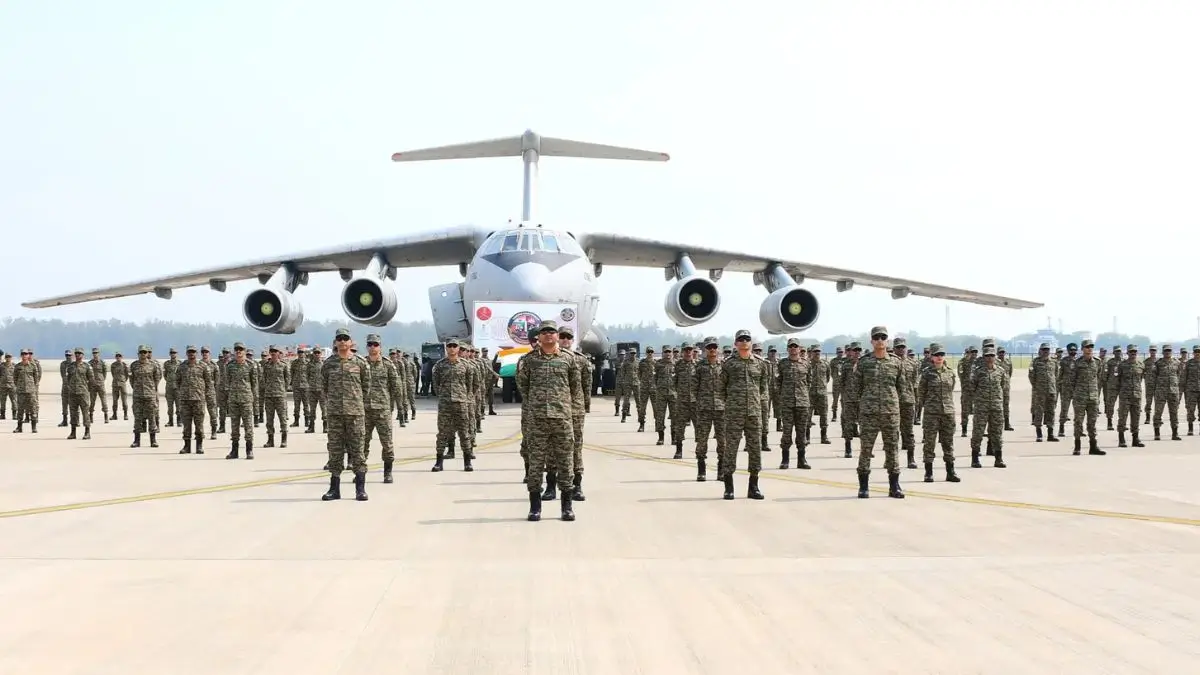
For the second edition of Exercise CINBAX-II, which will take place at Camp Basil in Kampong Speu Province from May 4–17, 2026, the Indian Army has sent a detachment of 120 soldiers, mostly from the Maratha Light Infantry Regiment, to Cambodia.
Under the scope of a United Nations mission, 160 members of the Royal Cambodian Army will participate in the exercise, which focuses on counterterrorism operations in semi-urban and jungle locationAn important development in India’s military cooperation and defense diplomacy with Cambodia is the bilateral exercise CINBAX-II. The exercise, which takes place at the Techo Sen Phnom Thom Mreas Prov Royal Cambodian Air Force Training Center, aims to improve coordination, operational synergy, and interoperability between the two militaries.
Because small-unit tactics are crucial in sub-conventional warfare situations, the training will be carried out at the company level.
The exercise would be in line with the present dynamics of counterterrorism operations, especially those faced by peacekeeping forces during UN missions, the Ministry of Defense has emphasized.Bidding for government contracts
This alignment demonstrates India’s dedication to using practical military operations to promote world peace and stability. Joint tactical drills, validation exercises, and in-depth conversations targeted at improving operational plans will all be part of the exercise.
sThe curriculum will include specialized training modules. These will address sniper tactics, drone operations, and mortar deployment, showing how modern combat is changing and how troops must adjust to new technology.
Both contingents will be able to share operational experiences and best practices from various missions against hostile forces in semi-urban settings thanks to this training.There are 120 soldiers from the Indian Army and 160 from the Cambodian side. With both parties making significant contributions to the activity, this balance guarantees a strong interchange of abilities and experiences.
The Maratha Light Infantry Regiment, which makes up the majority of the Indian contingent, demonstrates the regiment’s proficiency in operating in a variety of terrains and its involvement in India’s military operations abroad.
In addition to providing tactical training, CINBAX-II serves as a forum for improving India-Cambodia bilateral ties. Defense experts point out that these exercises are more than just military drills; they are also representations of mutual trust, collaboration, and dedication to regional and international peace.
It is anticipated that the exercise will improve mutual understanding and add to the larger framework of India’s defense cooperation with friendly foreign countries.
Chapter VII of the United Nations mandate, which regulates peacekeeping operations and the use of force to uphold international peace and security, provides the basis for the exercise. This gives the exercise more credibility and worldwide significance, establishing it as a component of a larger endeavor to get forces ready for multinational operations.
CINBAX-II represents the expanding defense collaboration between India and Cambodia in addition to its immediate tactical advantages. It is anticipated to strengthen relations between the two countries and support collective security and regional stability.
Additionally, the exercise shows how aggressive India is in military diplomacy and how dedicated it is to forming alliances that tackle changing global security issues.
.