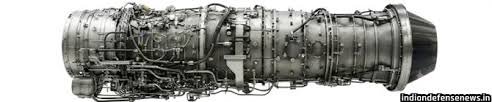
With significant advancements in weight reduction, thrust performance, and innovative materials made by the Gas Turbine Research Establishment, India’s Kaveri 2.0 fighter jet engine program has reached a critical stage.
An important step toward India’s aerospace self-reliance, the engine is now aiming for integration with TEJAS variants by 2030 and may eventually power the Ghatak UCAV and the Advanced Medium Combat Aircraft.
The original Kaveri program, which had trouble meeting the thrust and weight requirements for the TEJAS fighter, provided decades of experience that this venture draws upon.
he new effort is focused on creating an advanced engine core with improved compressor, combustion, turbine, and digital engine-control technologies. The long-term goal is to reduce India’s dependence on foreign powerplants and establish a stronger indigenous aerospace propulsion ecosystem.
Air ForceHistorically, TEJAS MK-1 and MK-1A fighters relied on American GE-F404 and F414 engines, but delays in deliveries underscored the strategic vulnerability of relying on imported turbofans. Kaveri 2.0 is designed to overcome these limitations by delivering thrust levels comparable to foreign engines while maintaining a lighter weight and improved reliabilityRecent breakthroughs include a dramatic reduction in engine weight from the original 1,235 kilograms to around 1,100 kilograms, with future prototypes aiming for below 1,000 kilograms.
Engineers have achieved this through modular redesign, additive manufacturing, and the use of composite structures. Advanced materials such as single-crystal turbine blades and polymer matrix composites are being incorporated to withstand higher turbine inlet temperatures and reduce structural mass.
Historically, TEJAS MK-1 and MK-1A fighters relied on American GE-F404 and F414 engines, but delays in deliveries underscored the strategic vulnerability of relying on imported turbofans. Kaveri 2.0 is designed to overcome these limitations by delivering thrust levels comparable to foreign engines while maintaining a lighter weight and improved reliability.
Modern Full Authority Digital Engine Control systems, boltless turbine blade configurations, integrated BLISK compressors, and enhanced aerodynamics are examples of technological advancements.Historically, TEJAS MK-1 and MK-1A fighters relied on American GE-F404 and F414 engines, but delays in deliveries underscored the strategic vulnerability of relying on imported turbofans. Kaveri 2.0 is designed to overcome these limitations by delivering thrust levels comparable to foreign engines while maintaining a lighter weight and improved reliability.
Modern Full Authority Digital Engine Control systems, boltless turbine blade configurations, integrated BLISK compressors, and enhanced aerodynamics are examples of technological advancements.
These developments improve thrust-to-weight ratios, efficiency, and dependability. Predictive fatigue analysis and digital twin modeling are also being utilized to shorten development cycles and cut down on expensive physical testing.
Beyond propulsion, Kaveri 2.0 is important because of its strategic implications. India would be protected against export restrictions, geopolitical upheavals, and shortages of external supplies by a successful domestic engine.The program is following a phased approach: certifying the dry derivative for unmanned roles, demonstrating afterburner operation, integrating with a TEJAS flying test-bed, and eventually scaling to full production for manned fighters. If successful, Kaveri 2.0 could also power India’s fifth-generation Advanced Medium Combat Aircraft and the stealth Ghatak UCAVKaveri 2.0 is not just about building an engine. It represents India’s determination to achieve technological independence in one of the most complex areas of aerospace engineering.
If the program succeeds, it will mark a milestone in India’s journey toward mastering advanced fighter aircraft engines and joining the select group of nations capable of designing and producing them.
.