A new independent analysis published in Sage Journals has indicated that India required between 67 and 79 fighter squadrons to guarantee a high chance of air superiority in a simultaneous two‑front struggle against near‑peer enemies.
This number is significantly greater than the Indian Air Force’s present operational count of between 29 to 31 active squadrons and its sanctioned strength of 42 squadrons.
The paper models dynamic, data-farmed air combat scenarios under severe data restrictions using a discrete-time engagement-gated Monte Carlo simulation framework. This approach enables probabilistic results over several rounds, offering a more accurate evaluation of force requirements under different circumstances.
Depending on assumptions about China’s particular force commitment levels in relation to the Indian theater, the precise number within the 67–79 range varies. The requirement increases toward the top threshold if China sends a greater percentage of its fleet to the area. The number stays closer to the baseline estimate if commitments are reduced.
Conventional standards from calculations made after 1962 are becoming more and more insufficient.
They don’t take into consideration the current scope and speed of near-peer enemies’ air force modernization. The rapid growth of China’s J-20 stealth fleet and Pakistan’s incorporation of cutting-edge Chinese systems have altered the regional air balance, necessitating a reevaluation of India’s force posture.
It has long been believed that India’s authorized strength of 42 squadrons is adequate for single-front emergencies.
However, due to the retirement of older aircraft like the MiG-21, the current operating strength of only 29 to 31 squadrons creates a sizable gap. The slow rate of indigenous development and the delays in implementing new platforms exacerbate this shortage.
The magnitude of India’s difficulty is highlighted by the estimated need for 67 to 79 squadrons. Accelerated acquisitions and quick modernization of current fleets would be necessary to reach this force level. Without such measures, India risks engaging a two‑front fight with insufficient airpower to secure superiority.
The report emphasizes how critical it is to accelerate India’s air combat capacity. While external acquisitions encounter financial and logistical challenges, domestic initiatives like the Advanced Medium Combat Aircraft are still years away from operational capability. It will take a combination of immediate procurement, ongoing investment, and long-term planning to close the deficit.
India’s need is a strategic necessity rather than just a numerical goal. Modern warfare is built on air superiority, which guaranties national security, prevents enemy escalation, and allows ground and naval forces to move freely. India’s capacity to project power in the area and protect its borders will continue to be jeopardized in the absence of sufficient squadrons.
The independent study therefore provides a stark warning. Unless India expands its fighter fleet to at least 67 squadrons, and ideally closer to 79, its capacity to prevail in a simultaneous two‑front conflict will remain uncertain. The urgency of this requirement cannot be overstated, as adversaries continue to modernise at industrial scale.
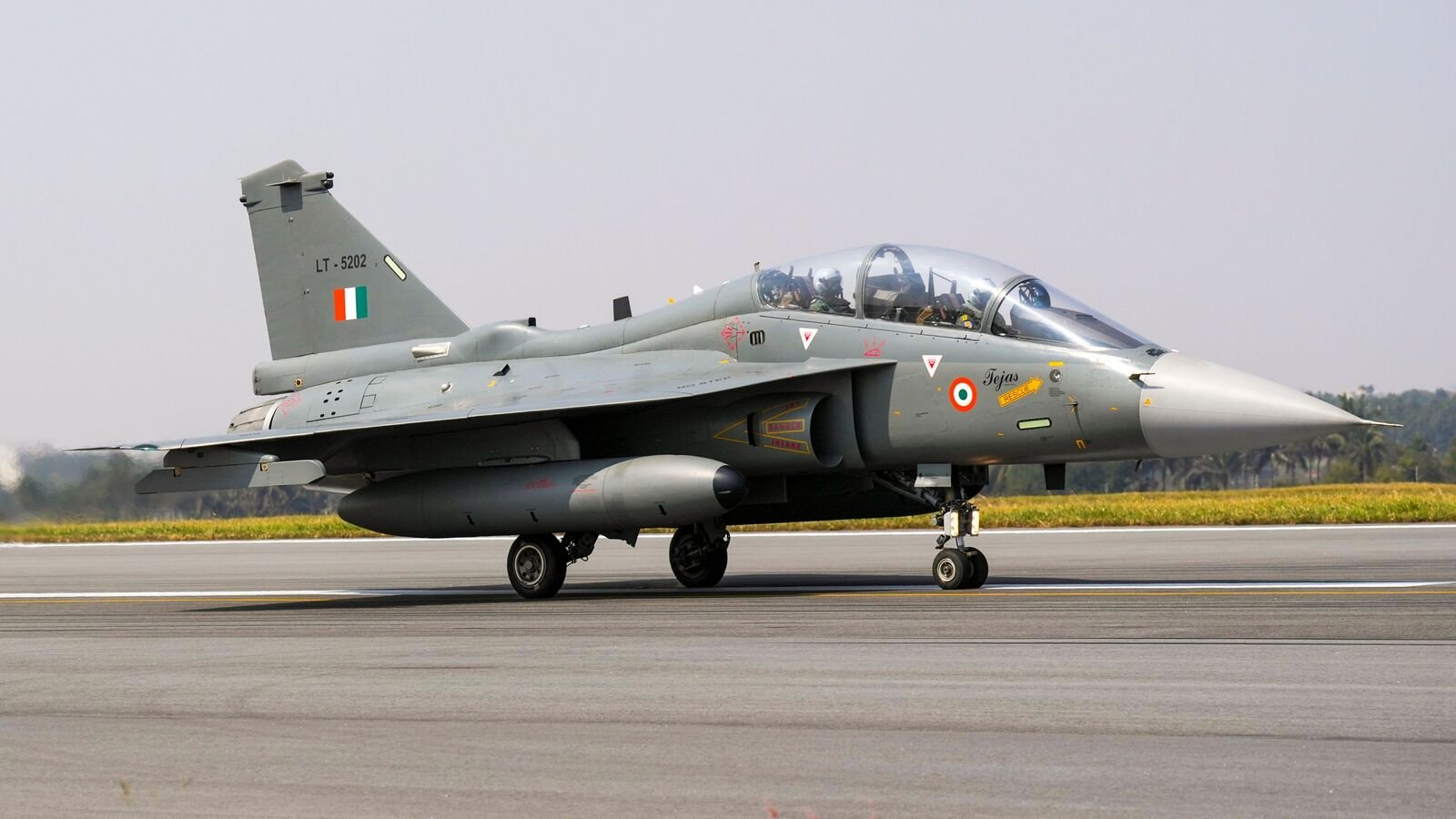
India’s fighter fleet transition is now well-organized: ADA and DRDO are leading the AMCA fifth-generation program under a rigorous public-private roadmap that aims for prototype rollout by 2027–2029 and induction by the mid-2030s, while HAL is accelerating TEJAS MK-1A deliveries with the first handovers anticipated by August–September 2026.
180 TEJAS MK-1A aircraft have been committed by the Indian Air Force. After the first contract for 83 aircraft was approved, 97 more were added, for a total of 180 aircraft. General Electric F404 engine shortages caused early delays, but HAL has stabilized supplies.
Nearly thirty airframes were structurally finished by the middle of 2026, and five or six of them were fully built and conducting integration tests. Six engines have already been delivered to HAL, and 15–20 more are anticipated in FY27, enabling the backlog to be converted into deliverable fighters. Purchasing Cutting-Edge Defense and Aerospace Equipment
The Astra beyond-visual-range missile testing is scheduled to take place between August and September of 2026, coinciding with the first formal handovers. HAL intends to deliver 18–24 aircraft by December 2026 to serve as the core of a second squadron. March 2027 is the deadline for the first operational squadron.
The first batch of 83 aircraft is anticipated to be finished by 2029–2030, while the remaining 97 should be delivered by 2033–2034. HAL has increased its yearly output from 8–12 to 24 units by adding three lines to its production capacity, including a new plant in Nashik.
HAL’s order book increased to ₹2.54 lakh crore in FY26, including the TEJAS contracts, and the company recorded ₹33,050 crore in revenue.
AESA radar, sophisticated electronic warfare suites, a digital cockpit, and Astra missile integration are all features of the TEJAS MK-1A. The Uttam AESA radar, which has completed more than 125 flight tests and is slated for integration starting with the 41st production aircraft, is an example of how indigenous subsystems are being given priority.
Uttam provides multi-target tracking, interoperability with ASTRA MK-2 missiles, and detection ranges of up to 240 km against fighter-sized targets. The majority of the second batch of 97 aircraft will have Uttam thanks to HAL’s ₹2,205 crore procurement for antenna arrays to allow serial production.
Concurrently, the AMCA program has reached a pivotal stage. The Ministry of Defense released a ₹15,000 crore Request for Proposals for five prototypes in May 2026. Tata Advanced Systems, L&T-BEL-Dynamatic, and Bharat Forge-BEML-Data Patterns are competing private consortiums; HAL is not involved in lead integration. By late 2026, a contract is anticipated to be signed.
The roadmap calls for the first prototype to be released by 2027–2029, the first flight to occur by 2028–2029, and the completion of 1,800 test sorties by 2032. Full induction is expected by 2035, with limited series production planned for 2033–2034. Purchasing Systems for Tactical Defense
While the MK-2 will have an indigenous engine with 120 kN thrust that was co-developed with Safran, the AMCA MK-1 will use imported GE-F414 engines. The aircraft will have internal weapons bays, radar-absorbent materials, stealth shaping, supercruise capability, and AI-driven sensor fusion. By integrating sixth-generation computing onto a fifth-generation airframe, ADA refers to it as a “5.5-generation” fighter.
While the F414 engine designed for TEJAS MK-2 and AMCA MK-1 generates 22,000 lbf with better fuel efficiency, durability, and payload capacity, the GE-F404 engine powering TEJAS MK-1A produces roughly 17,700 lbf of thrust. Performance is improved by a 16% increase in airflow thanks to the F414’s bigger fan and sophisticated blisk compressor.
Thus, India’s prospective fleet transitions are well-defined. By 2029, TEJAS MK-2 will close the gap with bigger payloads and GE F414 engines; by 2035, AMCA will offer stealth capability; and TEJAS MK-1A deliveries will stabilize squadron strength until 2034. Together, these initiatives seek to lessen the IAF’s dependency on imports and return it to its authorized strength of 42 squadrons.