India’s only titanium sponge facility is located inside the expansive Kerala Minerals and Metals Limited (KMML) complex on the coast of Malabar. According to Mathrubhumi, this factory has been producing the spongy silver-grey metal that serves as the foundation for contemporary missiles, fighters, and submarines since 2011.
India is now one of just seven nations in the world possessing this capability, making it a national accomplishment.
However, despite the fact that defense projects have grown at an unparalleled rate, the factory has been trapped at a limit of 500 tons annually for 15 years.
With the third-largest ilmenite and second-largest rutile deposits in the world, India has enormous titanium reserves. The Defense Metallurgical Research Laboratory in Hyderabad created the technique, which is dependable. However, capacity has not increased.Purchasing Systems for Tactical Defense
Before being turned into aerospace-grade alloys, every ton of sponge made in Kerala must go through Mishra Dhatu Nigam in Hyderabad. The only indigenous source of titanium alloys suitable for use in defense is this one downstream facility. The process is a balancing act, according to MIDHANI engineers, where any interruption in the supply of sponges, alloy capacity, or testing slots puts the entire chain at risk.
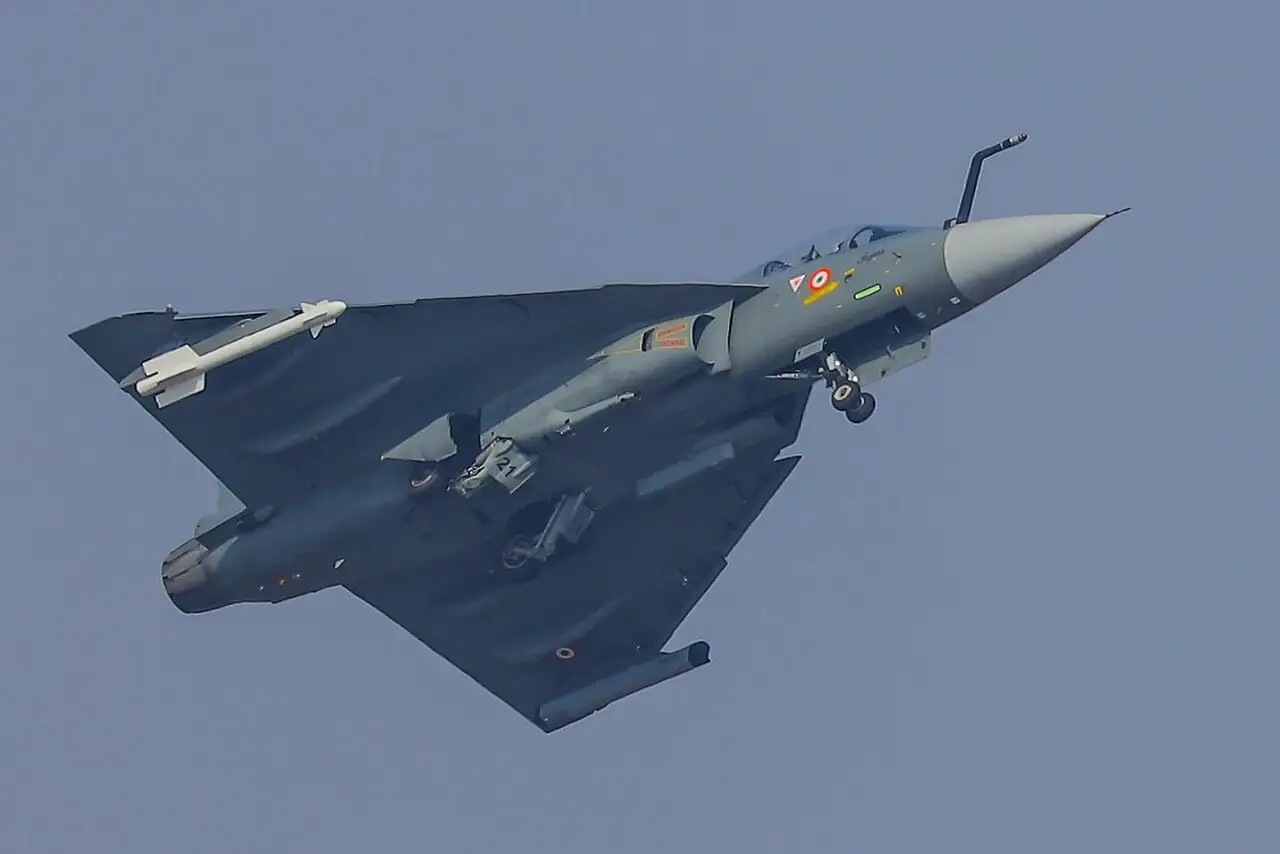
The most pressing issue is the TEJAS MK-1A program. In order to fulfilll an order book of 180 fighters, Hindustan Aeronautics has increased manufacturing to 24 aircraft per year and plans to reach 30 by 2027–2028. Titanium alloys are needed for engine mounts, landing gear, and structural parts in every airplane.
The present capped chain cannot ensure a steady supply of alloys, which is necessary to maintain this speed.
The stakes are increased by the Advanced Medium Combat Aircraft (AMCA) project. Although alloy qualifying and capacity growth must start years earlier, series production is planned for 2035. Because propulsion and pressure-critical components are drawn from the same limited source, the development of submarines creates an additional layer of demand.
The 500-ton restriction is a source of pride and annoyance for KMML employees. They are the sole manufacturers of titanium sponge in India, however they are unable to increase production.
The strain is considerably more intimate at MIDHANI. They are producing the bones of India’s fighters and submarines in addition to metal. National security is at stake from any failure.
The suggested KMML-SAIL joint venture is one possible remedy. Through this collaboration, KMML’s technology and SAIL’s experience in large-scale metal production would be combined to increase sponge capacity beyond what is now possible.
Its timing, according to analysts, needs to be considered as vital defense infrastructure and publicly connected to TEJAS and AMCA delivery schedules. Although KMML has stated that it intends to increase production to more than 1,000 tons per year, this has not yet happened.
The company further emphasizes that it is the sole manufacturer of rutile-grade titanium dioxide in India using the chloride approach.
Three critical steps are outlined by defense analysts. First, expedite the KMML-SAIL joint venture and align its timeline with the delivery of fighters and submarines.
Second, qualify at least one other alloy manufacturer to expand your supply beyond MIDHANI.
Third, ensure that future Defense Acquisition Procedure contracts include information about the sourcing of minerals and alloys, so that new orders are accompanied by verified supply chains rather than conjecture.
The time to take action is running out. The timeline is established by AMCA’s 2035 production start because expansion and qualification require years. A timely decision would still be made within the current defense budget cycle. India’s titanium problem stems from capacity planning that hasn’t kept up with defense acquisition, not from a lack of resources.
Although the technology is functional and the ore is present, policy attention has not kept pace with ambition. The stakes are obvious for the employees at KMML and MIDHANI. They produce more than simply metal. The future of India’s defense is being created by them. And that future is currently limited to 500 tons annually.