Given the continuing border dispute between Beijing and New Delhi in the Himalayas, China is expected to see India’s most recent defense agreement with South Korea as extremely sensitive, according to China-based media outlet SCMP.
Analysts contend that China’s security calculations will be directly impacted by India’s decision to increase defense sector collaboration with Seoul in the areas of artillery and anti-aircraft weapons.
South Korean President Lee Jae Myung met with Prime Minister Narendra Modi on his three-day visit to India and declared that both nations had decided to strengthen their defense and economic ties.
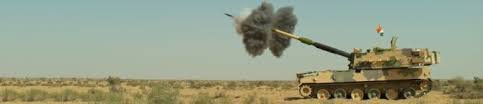
Important industries including shipbuilding, defense, and artificial intelligence will be the main focus. Lee emphasized South Korea’s backing for India’s Atmanirbhar Bharat policy, promising to aggressively support the manufacture and use of Indian defense equipment as well as to look into cooperative technological development. As an effective illustration of bilateral defense collaboration, he mentioned the K9 Thunder cannon.
About 100 K9 Vajra-T 155mm self-propelled howitzers are currently in use in India, and an additional 100 are planned. These systems are designed for India’s desert and high-altitude conditions and are produced domestically by Larsen & Toubro using technology transferred from Hanwha Aerospace.
In the midst of tensions with China and Pakistan, the Indian Army has stationed them in Ladakh to bolster long-range firepower. In addition to being an all-weather substitute for air assistance, self-propelled howitzers are also useful in hilly areas since they can fire at sharp angles to clear peaks and hit targets in valleys.
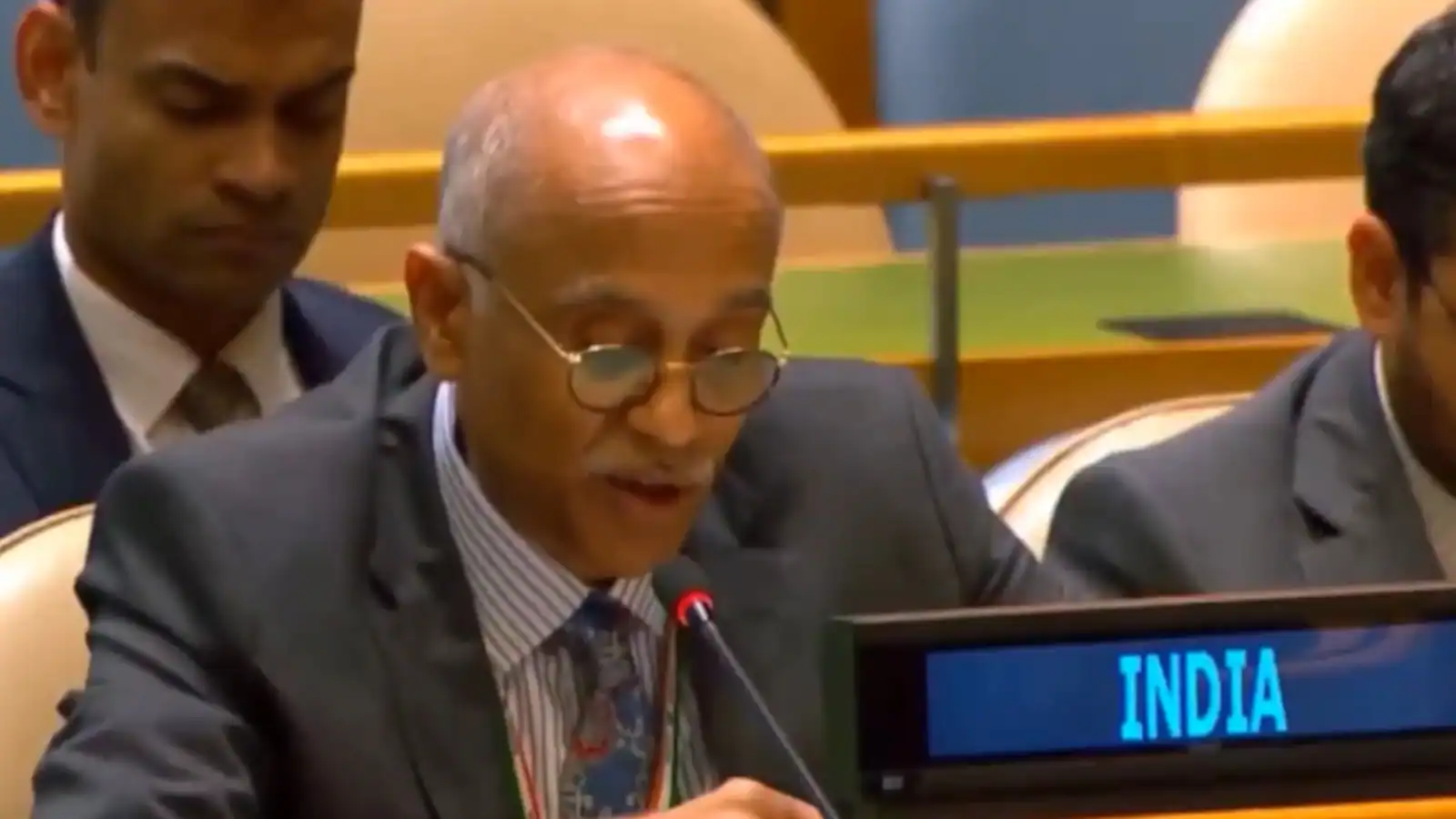
Delhi is starting a “third phase” of collaboration with South Korea, according to Periasamy Kumaran of India’s Ministry of External Affairs. This phase will go beyond direct acquisitions and localization to include advanced manufacturing, knowledge transfer, and co-design of next-generation defense weapons.
In order to combat new aerial threats like drones, discussions are also taking place on the development of air defense systems, such as missile platforms and anti-aircraft cannons.
The strategic significance of these changes is emphasized by analysts. Howitzers and anti-aircraft guns are essential to India’s defenses, especially along disputed frontiers, according to Nishant Rajeev of Singapore’s S. Rajaratnam School of International Studies. He emphasized India’s need for layered air-defense systems against drones, cruise missiles, and fighter aircraft, describing the K9 joint manufacture as an example of collaboration that might be expanded. The current confrontation between India and Pakistan featured a lot of drones, highlighting how urgent these capabilities are.
According to Kang Jun-young of Hankuk University of Foreign Studies, Beijing is likely to have a negative opinion of South Korea’s defense cooperation with India, believing Seoul to be involved in the US-led containment of China. He cautioned that indigenous production and knowledge transfer might significantly increase India’s defense self-sufficiency, posing a strategic threat to China’s interests.
India’s collaboration with South Korea, according to Jagannath Panda of the Institute for Security and Development Policy in Sweden, is part of a larger shift away from weaponry imports and toward business alliances.
Seoul is a reliable technical partner because of the K9 Vajra-T’s success, which showed that South Korean systems could be made domestically and modified for Indian terrain.
The importance of artillery, air defense, and mobile weaponry is demonstrated by India’s recent border conflicts with both China and Pakistan. Panda emphasized that these capabilities are related to India’s preparation for long-term rivalry with China while retaining readiness against Pakistan, rather than just being commercial.
He pointed out that South Korea’s defense sector is prized for its speed, scalability, and cutting-edge engineering—qualities that India requires in a worsening regional climate. According to Ian Hall of Griffith University in Australia, India may greatly strengthen its deterrence capabilities against threats from the north and west by partnering with South Korea.
Therefore, India’s pursuit of quicker modernization cycles, cooperative development, and sophisticated manufacturing with South Korea serves as a signal of strategic intent in addition to bolstering its armed forces.
Beijing will undoubtedly see it as a direct challenge if South Korean defense technology strengthens India’s capabilities along disputed boundariesTherefore, India’s pursuit of quicker modernization cycles, cooperative development, and sophisticated manufacturing with South Korea serves as a signal of strategic intent in addition to bolstering its armed forces.
Beijing will undoubtedly see it as a direct challenge if South Korean defense technology strengthens India’s capabilities along disputed boundaries.
.