According to the Unlawful Activities (Prevention) Act, the NIA charged Saeed and LeT with plotting to wage war against India. A non-bailable warrant was then issued against him by a special NIA court, demonstrating India’s resolve to hold him accountable despite his incarceration in Pakistan.
India Calls for Immediate UNSC Reform and Increased Global South ParticiMadni’s comments are noteworthy for their timing. Saeed was named as a major suspect in the April 2025 Pahalgam terror incident, which claimed 26 lives, according to a chargesheet filed by India’s National Investigation Agency (NIA) on July 6, 2026.
According to the Unlawful Activities (Prevention) Act, the NIA charged Saeed and LeT with plotting to wage war against India. A non-bailable warrant was then issued against him by a special NIA court, demonstrating India’s resolve to hold him accountable despite his incarceration in Pakistan.
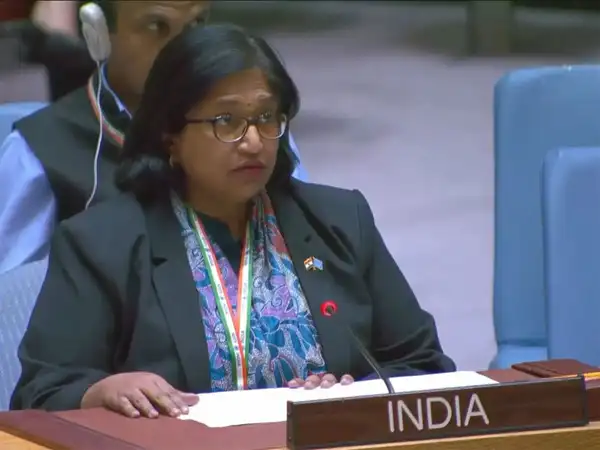
India has firmly reaffirmed its call for immediate UNSC reforms, emphasizing that the Council has to better represent the Global South and reflect current realities. Ambassador Yojna Patel emphasized that text-based discussions, greater transparency in working processes, and enlargement in both permanent and non-permanent categories are all necessary improvementIndia has urged the UN Security Council to undergo immediate reforms, claiming that the body’s decision-making framework needs to change to reflect modern circumstances. The need to reform the Council is more urgent than ever, according to Ambassador Yojna Patel, Charge d’Affaires of India’s Permanent Mission to the UN.
She noted that since 1945, the number of UN members has increased fourfold, demonstrating how drastically the world has changed. Patel emphasized that the Council’s makeup, dynamics, strategies, and methods of operation cannot be permanently determined by the conclusion of a single fight that occurred eight decades ago. Change must occur as soon as possible, she emphasized.
India’s stance on UNSC reforms was succinctly restated. According to Patel, both membership categories need to grow, with the Global South and developing nations having more participation. She maintained that text-based agreements with clear deadlines and milestones were the best way to accomplish this.
She emphasized that conversations about enhancing the Council’s operational procedures shouldn’t be conducted in a vacuum. Working methods reform, according to Patel, is intrinsically connected to other clusters like membership categories, regional representation, and the veto issue. She cautioned against handling these issues in isolation.
She emphasized that conversations about enhancing the Council’s operational procedures shouldn’t be conducted in a vacuum. Working methods reform, according to Patel, is intrinsically connected to other clusters like membership categories, regional representation, and the veto issue. She cautioned against handling these issues in isolation.
She also emphasized the need for nations that send troops and police to UN peacekeeping operations to participate in the decision-making process on important matters. According to Patel, Troop Contributing Countries (TCCs) and Police Contributing Countries (PCCs) are required to participate in the decision-making process over mandates and resources, which goes well beyond their membership in the UNSC.
India asked the Council to expedite the appointment of subsidiary body chairmen. Patel demanded that Note 507 be changed to contain a final, non-negotiable deadline for choosing chairs.
Patel cautioned against using UNSC membership to further political agendas in relation to terrorism. She stated that membership in the Council should not be used to de-list terrorists or designate other organizations as terrorist organizations based only on political considerations without objective standards or supporting evidence.
Patel urged more cooperation between the UN General Assembly and the Security Council in her closing remarks. She called the Assembly the most democratic and universal branch of the UN and stated that in order to facilitate tighter communication between the Council and other major bodies, working procedures need to be changed.
India’s long-standing demand for fundamental reforms, such as growth in both permanent and non-permanent categories, increased representation for Africa and the Global South, and greater accountability in working procedures, is reflected in its intervention.
In order to ensure that multilateral organizations continue to be legitimate and successful in tackling today’s issues, the appeal is in line with larger discussions on their reform.
s.
pation