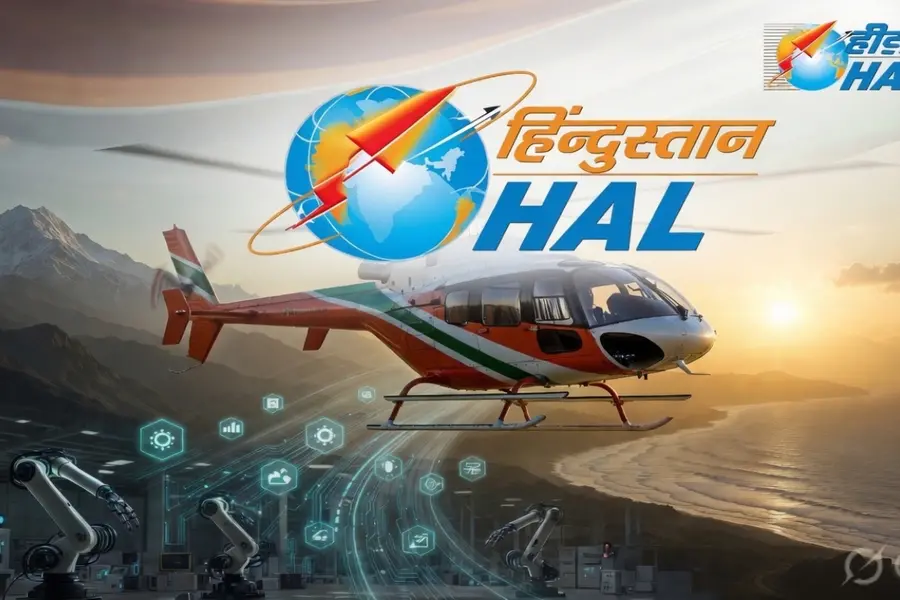
According to an analysis by Girish Linganna of Mathrubhumi, Hindustan Aeronautics Limited plans to continue producing its flagship Advanced Light Helicopter Dhruv for an additional eight to ten years, keeping the line alive at least into the mid-2030s as India increases its reliance on domestic defense aerospace platforms.Pakistan-India Relations
From about 400 deliveries in early 2024, the Dhruv, which is now acknowledged as the mainstay of India’s military helicopter fleet, has surpassed 440–450 aircraft.
HAL has been able to maintain consistent contributions to the nation’s operational airpower thanks to this consistent production, which has helped offset slower ramp-ups in other flagship programs like the TEJAS.
New orders from both military and civilian clients have improved the Dhruv’s prospects. Six cutting-edge DHRUV MK-III helicopters, which will be used for coastal surveillance, search and rescue, and interdiction operations throughout India’s extensive shoreline, were purchased by the Indian Coast Guard in March 2026 for ₹2,901 crores.
In late 2025, Pawan Hans ordered 10 Dhruv NG helicopters for use in emergency medical evacuation missions and to operate offshore oil rigs like Bombay High.
These agreements strengthen the type’s function as a multi-mission platform that can transport troops, evacuate casualties, rescue communities stranded by flooding, and assist maritime enforcementSales of Dhruv have been slow abroad, but interest is growing, especially in South American and Southeast Asian nations where operators appreciate a light utility helicopter that is tough, reasonably priced, and up to date.
The current order book already ensures a consistent revenue stream for the next seven to eight years, according to HAL’s own financial statements. This is a rare comfort for many aerospace vendors in a volatile worldwide market.
.
The armed MK-IV Rudra Attack Gunship variant, which offers Indian Army forces close-support weaponry during combat operations, and utility MK-III machines are part of this pipeline. A total of well over 500 Dhruv-family helicopters are anticipated to be required by the armed forces, providing plenty of space for additional orders that will extend production even further.
The Dhruv NG, which finished its first flight on December 30, 2025, and is currently being positioned as a next-generation workhorse, is a major force for the prolonged manufacturing run. The NG version has a contemporary glass cockpit with digital displays, two domestic Shakti-1H1C engines made in India, and sophisticated vibration-damping technologies for smoother flight.
The Dhruv NG, which has a top speed of over 285 km/h and is certified to European safety standards (EASA), is intended to update the local fleet and create reliable export opportunities. If HAL intends to become more than just a “low-cost local supplier” and become recognized as a major worldwide helicopter supplier, its success is essential.
In India’s rotary-wing architecture, Dhruv also holds a crucial intermediate tier. It serves as a link between the bigger, still-developing Indian Multi-Role Helicopter (IMRH) program and the smaller Light Utility Helicopters (LUH) being produced for the Army.
The Dhruv will continue to be India’s principal flying workhorse for troop insertion, disaster relief, casualty evacuation, and combat support until IMRH and other new platforms are developed. The current fleet of more than 400 aircraft will need maintenance, spare parts supply, and mid-life modifications for at least another 25 to 30 years after the final manufacturing aircraft comes off the line. Thousands of skilled jobs throughout HAL’s divisions and its larger vendor ecosystem are expected to be secured by this long-tail sustainability foundation.
Despite this encouraging environment, Kota Ravi, the new Chairman and Managing Director of HAL, must overcome a number of intricate organizational and administrative obstacles. The usage of the Government e-Marketplace (GEM) portal, where the lowest bid is frequently regarded as the sole criterion, is one of the most urgent.
Prioritizing the lowest cost over quality, dependability, and long-term support can put aircrew in danger and jeopardize mission success for a crucial, safety-sensitive platform like the Dhruv. The program may have to bear hidden costs later in the lifetime if small-time vendors undercut on price up front only to supply subpar components or fail to fulfill service agreements.
The quote-validity regulation that suppliers are subject to is another structural problem. Without establishing a precise opening or assessment date, HAL frequently requests validity periods of up to 180 days from the moment a vendor submits a bid via the GEM portal.
Reputable suppliers cannot credibly lock in prices for six months without incorporating considerable risk premiums in a world where raw-material costs and currency values can change dramatically within weeks. The talent pool of possible partners is reduced and the supply chain is weakened as a result of this sluggishness, which effectively forces qualified suppliers to either raise their quoted rates or leave the market entirely.
Another issue is reverse auctions, which take place after the first tender opening. Many in the industry believe that the process lacks openness and transparency, and there are concerns that it may be managed to benefit specific suppliers, particularly in the HAL Kanpur division.
Reverse auctions erode confidence and stifle innovation when they are utilized arbitrarily and without clear, auditable regulations. Vendors start to see HAL more as a transactional customer and less as a technology-driven collaborator, which reduces the incentive to invest in better designs or more effective manufacturing techniques.
The implementation of Industry 4.0 concepts, like digital thread planning, real-time asset tracking, smart robotics, and predictive maintenance analytics, is still uneven throughout HAL’s divisions on the factory floor.
The Dhruv production line will find it difficult to match the speed, consistency, and yield of its international rivals without a methodical use of automation, digital twins, and connected shop floor technologies.
Slippages can collect covertly because there is rarely a clear chain of responsibility or a performance-linked consequence when delays occur. Reducing lead times and increasing throughput would be greatly aided by a more disciplined system with clearly defined responsibilities, time-bound decision-making, and a reward-for-performance culture.
Kota Ravi sees the chance to match the Dhruv’s technical capabilities with an organizational structure that is more open, flexible, and responsible. HAL already has a solid foundation for expansion because to the helicopter’s excellent track record, growing use in both the military and the civilian sector, and its recently certified NG variant.
The corporation can turn Dhruv from a competent domestic platform into a really world-class product line by streamlining procurement procedures, strengthening accountability within the IMM framework, and hastening the use of Industry 4.0 capabilities.
In addition to ensuring long-term manufacturing through the mid-2030s, such modifications will strengthen the Dhruv’s symbolic standing as the cornerstone of India’s “Atmanirbhar Bharat” defence program. A more effective and dependable HAL will result in quicker response times, safer operations, and more national pride for soldiers on the Siachen glacier, sailors working far offshore, and citizens caught in floods and natural calamities.Pakistan-India Relations