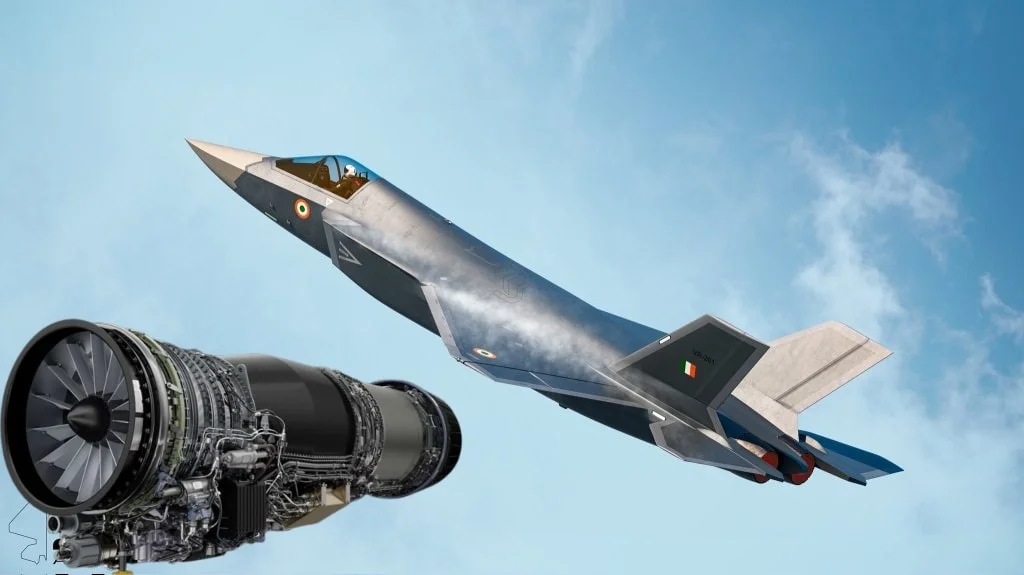
Due to ongoing delays in GE’s F404 and F414 engine deliveries, India is considering a historic collaboration with France’s Safran to jointly build engines for the TEJAS MK-2 fighter.
Safran’s offer of complete intellectual property transfer has the potential to revolutionize India’s aerospace industry and grant it previously unheard-of independence in the design and manufacturing of jet engineWith Safran being considered as a partner for the TEJAS MK-2 engine development, India’s quest for defense technology independence has taken a significant turn. The Indian Air Force’s induction timeline has been hampered by delays in General Electric’s supply of F404-IN20 engines for the TEJAS MK-1A.
Reactivation of GE’s long-dormant production line for these engines has been hindered by logistical obstacles, component shortages, and pandemic-related interruptions. Concerns regarding operational readiness have been raised as a result of the IAF’s fleet modernization plan being delayed.
sOn the other hand, Safran has progressively increased its presence in the Indian aerospace industry. As part of a €1 billion worldwide investment in MRO infrastructure, the business plans to open a new Maintenance, Repair, and Overhaul facility in Hyderabad in 2025 specifically for servicing LEAP engines.
Additionally, it is strengthening its long-term commitment to India’s aviation ecosystem by working with Hindustan Aeronautics Limited to build a helicopter engine MRO facility in Goa. These initiatives demonstrate Safran’s approach to fully integrating itself into India’s aerospace supply chain.
Because it provides full technology transfer, intellectual property rights, and previously unattainable access to cutting-edge propulsion technologies, Safran’s collaboration is crucial for India.
By enabling domestic jet engine development, lowering reliance on foreign suppliers, and establishing India as a worldwide aerospace hub, this partnership directly supports the Make-in-India initiative.
For a long time, India’s dependence on engines made elsewhere has been a strategic weakness. Imported propulsion systems power aircraft like the TEJAS, Sukhoi Su-30MKI, and Mirage-2000; acquisition and maintenance expenses account for a significant amount of defense spending.
A significant step toward ending this reliance is Safran’s commitment to collaborate with Hindustan Aeronautics Limited on the development of a 120 kN thrust engine, specifically for the Advanced Medium Combat Aircraft.
Safran’s commitment to 100% technology transfer and complete intellectual property rights sets the cooperation apart. In India’s aerospace partnerships, this is exceptional because crucial technologies like improved cooling systems, hot-section metallurgy, and turbine blade design have always been suppressed.
India will be able to design, develop, and produce engines on its own by acquiring access to these areas, guaranteeing long-term propulsion system sovereignty.
.The benefits of the Make-in-India initiative are numerous. India’s aerospace ecosystem will be revitalized by indigenous engine development, opening doors for both public and private sector participants. Updates about the Indian Military
Propulsion now fills a crucial gap in the avionics and subassemblies that companies like TATA Advanced Systems, Adani Defence, and Bharat Electronics Limited are already contributing to. This will boost high-value manufacturing throughout the supply chain, create jobs, and promote skill development.
From a strategic standpoint, the Safran partnership strengthens India’s independence and export capacity. India can customize aircraft to meet its operating needs without interference from other countries if it has control over engine technology.
Because customers favor platforms with locally controlled components, export feasibility also improves. This might open up markets in Latin America, Africa, and Southeast Asia, where there is an increasing need for affordable fighter aircraft.
Although ambitious, the roadmap is doable. By 2027, prototype engines are anticipated, followed by flight testing in 2028 and integration into AMCA squadrons by the middle of the 2030s.
Early AMCA prototypes will use GE F414 engines in the meantime, but when the Safran-developed engine is ready, it will take their place. With this change, India will become a member of the exclusive group of countries that can manufacture high-thrust fighter engines.Bidding for government contracts
The collaboration also tackles the lessons learned from the Kaveri engine program, which was unable to fulfill operating needs because it did not have access to essential technologies. India now has a practical means to go over previous obstacles and attain propulsion sovereignty because to Safran’s experience and complete knowledge transfer.
In conclusion, Safran’s cooperation is strategically essential for India’s Make-in-India initiative rather than merely a tactical reaction to GE’s delays. It lays the groundwork for India’s rise to prominence in the aerospace industry while bolstering domestic capabilities, broadening alliances, and guaranteeing defense manufacturing resilience.